Contents of this entry
A blade receives a name through useA gift used by more than one heroPrimary referencesRelated encyclopedia entries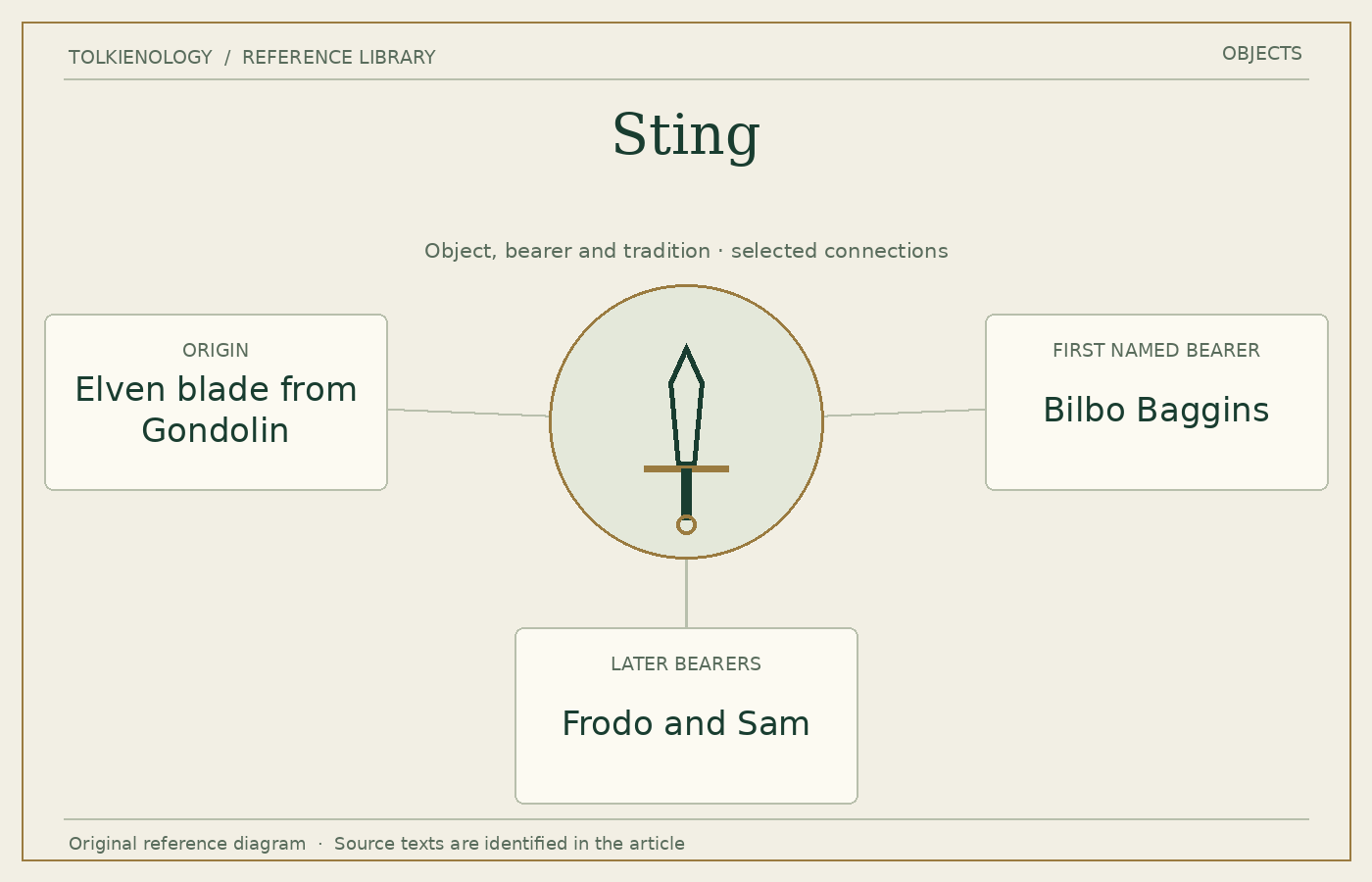
A blade receives a name through use
The blade comes from the same hoard as Glamdring and Orcrist. Its older Elven origin links the relatively intimate adventure of The Hobbit with the lost histories of Gondolin. Bilbo names it after using it against the spiders of Mirkwood, making the name a result of a new experience rather than simply an ancient inscription recovered intact.
Its glow warns of nearby Orcs. This property is useful without removing uncertainty: knowing that enemies are near does not establish their number, intentions or the safest route. The blade remains an aid to judgement, not an automatic defence against every danger.
A gift used by more than one hero
Bilbo gives Sting to Frodo at Rivendell. The inheritance carries affection and practical help rather than a royal claim. At Shelob’s lair, Sam takes it up when Frodo is unable to defend himself. Together with the phial of Galadriel, it enables resistance under conditions in which ordinary strength is radically unequal.
The fight does not establish that the weapon makes its bearer invulnerable or guarantees victory over any creature. Its effectiveness depends on the circumstances of use, Sam’s determination and Shelob’s own movement against it.
Sting’s passage among the hobbits is a useful contrast with the dynastic history of Narsil and Andúril. Both objects preserve memory, but they do so through different relationships. One follows kingship and inherited public obligation; the other follows hospitality, trust and the assistance that companions give when another person can no longer continue unaided.
Primary references
The Hobbit, “Roast Mutton”, “A Short Rest” and “Flies and Spiders”; The Lord of the Rings, Book II, “The Ring Goes South”; Book IV, “Shelob’s Lair” and “The Choices of Master Samwise”.