Contents of this entry
The sword in the hoardA Wizard who also fights with a bladePrimary referencesRelated encyclopedia entries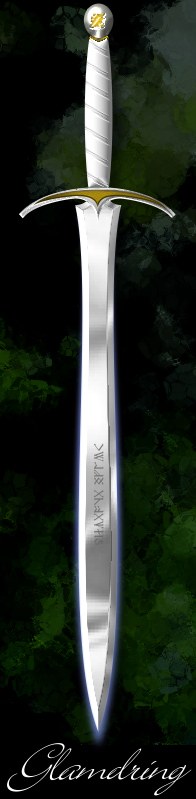
The sword in the hoard
Elrond recognises the weapon and explains its connection with the king of Gondolin. The translation “Foe-hammer” and the goblins’ name “Beater” record different memories of the same blade. A weapon can have a prestigious royal history for one people and an inherited association with fear for another.
Finding it in the hoard does not supply a complete itinerary from the First Age to the trolls. The gap is part of the book’s sense of depth: old things survive movements and losses not all available to the present travellers. An encyclopedia should preserve that gap rather than manufacture a chain of named owners.
A Wizard who also fights with a blade
Gandalf’s use of Glamdring complicates the assumption that his power consists only of spoken enchantments or a staff. In the goblin tunnels and later in the struggle around Moria, he also depends on the material means available to a traveller and combatant.
The blade’s Elven origin does not make every detail of modern prop design a textual fact. Film replicas can illustrate adaptation history when clearly captioned; inscriptions, dimensions and decorative motifs introduced for the screen should not automatically become the book weapon’s technical specifications.
Glamdring is best understood alongside Orcrist and Sting. They enter the journey together, yet later histories separate them through their bearers and uses. The relationship shows how a single discovery can open different routes through the legendarium without requiring every object to serve the same symbolic purpose.
Primary references
The Hobbit, “Roast Mutton”, “A Short Rest” and “Over Hill and Under Hill”; The Lord of the Rings, Book II, “The Bridge of Khazad-dûm”.