Contents of this entry
The broken sword and the surviving RingThe flame of the WestPrimary referencesRelated encyclopedia entries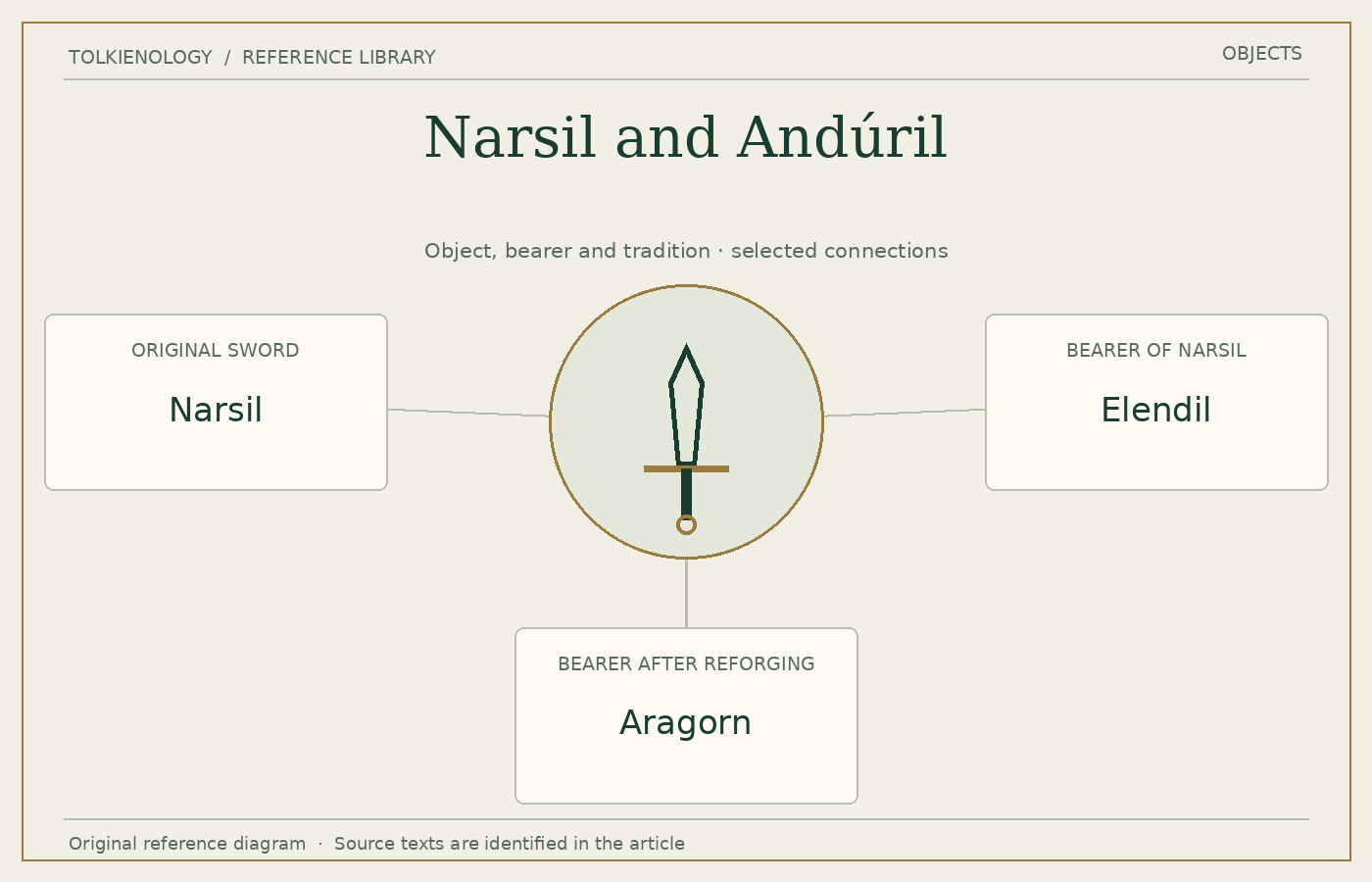
The broken sword and the surviving Ring
The breaking of Narsil accompanies Elendil’s death. Isildur uses its remaining blade to cut the Ring from Sauron’s hand. The sword is consequently bound to both the overthrow of the enemy and the failure to destroy the object through which he may return.
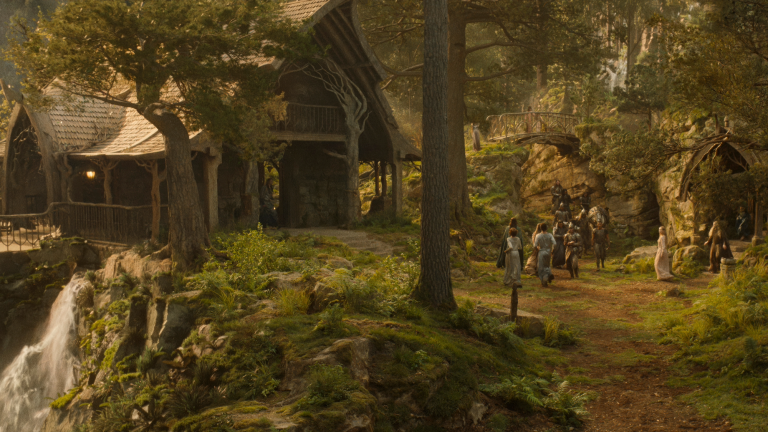
Its fragments are preserved among the heirlooms of the northern royal line. When Aragorn reveals the broken blade at Rivendell, the object is evidence of ancestry, but it is also a reminder of an unresolved obligation. Inheritance carries a past failure as well as a right to claim a name.
The flame of the West
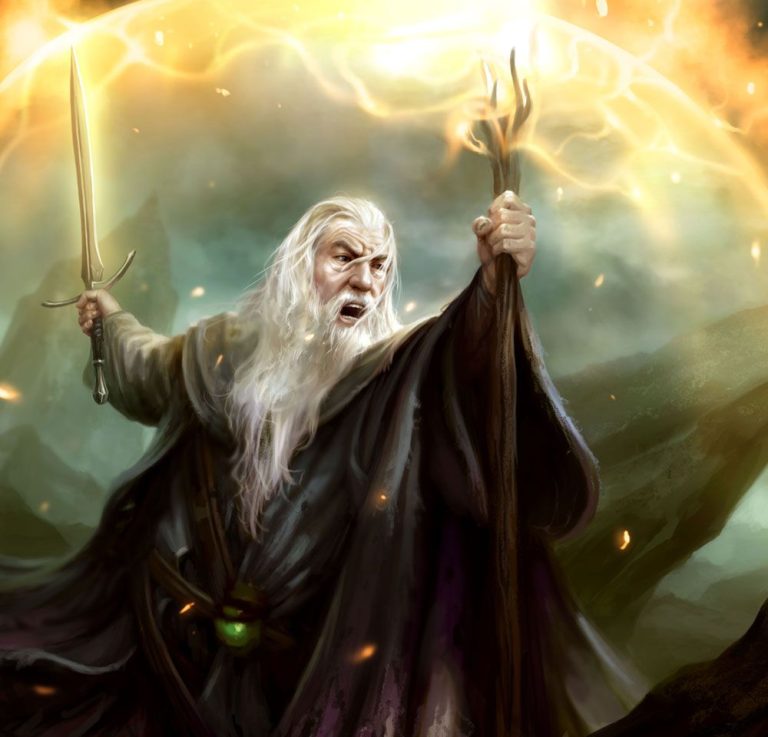
Andúril is reforged before the Fellowship leaves Rivendell. This sequence differs from the films, where the sword’s delivery is moved much later. Aragorn carries it through the journey rather than spending most of the war waiting for the object that will authorise his identity.
The new name, commonly rendered “Flame of the West”, marks continuity through renewal. It does not make a different, unrelated weapon appear, nor does it imply that the sword can substitute for service, recognition and judgement. Aragorn’s eventual kingship depends on more than possessing a royal artefact.
The accounts of Narsil’s making connect it with the Dwarven smith Telchar. Care is needed when combining the traditions around famous blades: Narsil, Angrist, Glamdring and Orcrist are not the same object merely because they belong to a history of exceptional craftsmanship. This combined entry treats Narsil and Andúril together because they are the same sword before and after reforging, not two opportunities to increase an encyclopedia’s count.
Primary references
The Lord of the Rings, Book II, “The Council of Elrond” and “The Ring Goes South”; Book V, “The Passing of the Grey Company”; The Silmarillion, “Of the Rings of Power and the Third Age”.