Contents of this entry
A surviving Dwarven centreFrom a threatened quarrel to a common battlePrimary referencesRelated encyclopedia entries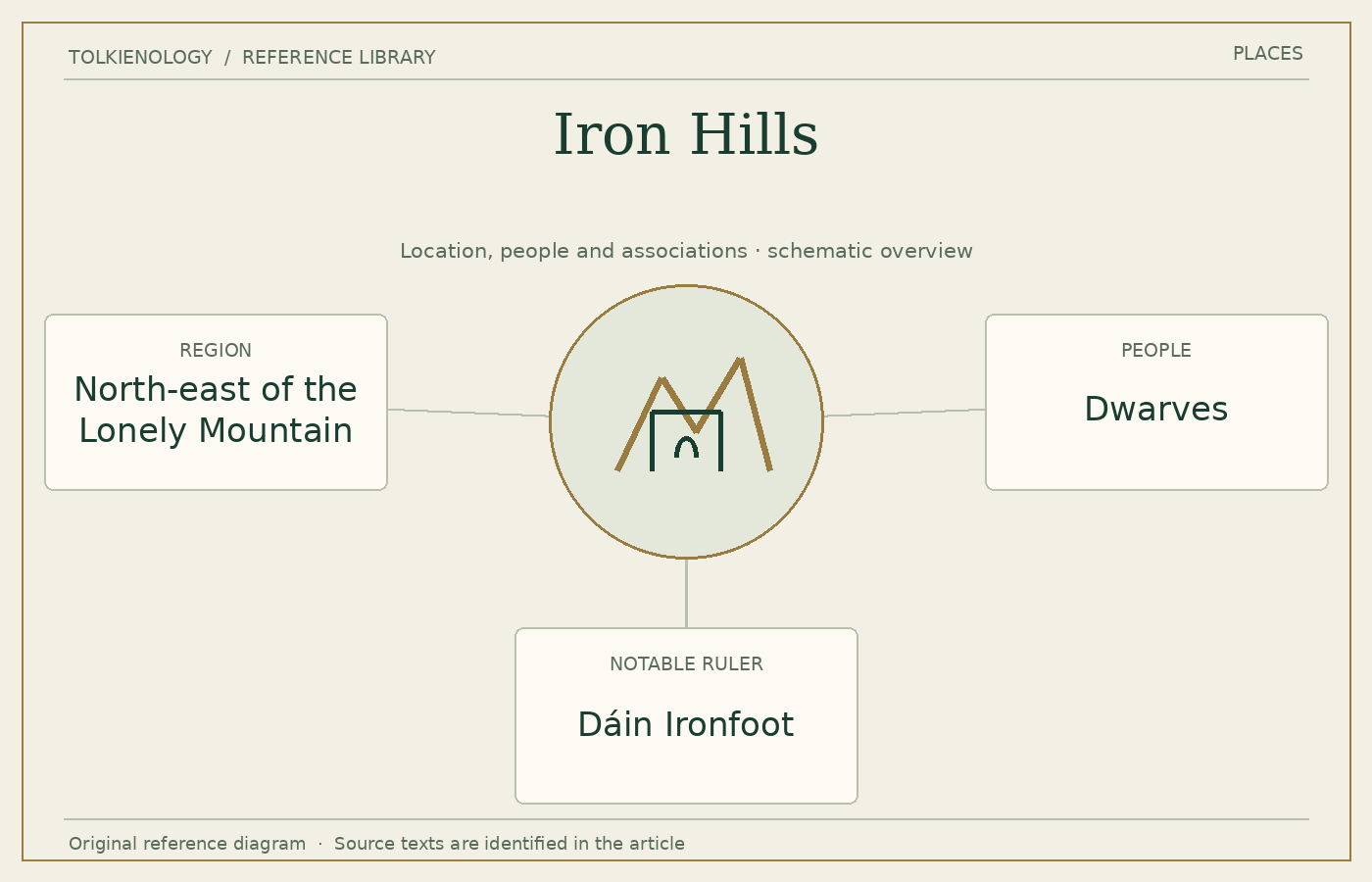
A surviving Dwarven centre
The histories of the Dwarves include movements between different halls, mountain regions and communities after the loss of earlier homes. The Iron Hills form one such centre, associated with a continuing capacity for craft, military organisation and the support of kin elsewhere.
Their geographical distinction matters during the treasure dispute. Dáin’s approach is an arrival from another established community, not the sudden appearance of troops who have been living inside Erebor all along. Thorin’s inherited claim and the kinship of the northern Dwarves make aid possible, but they do not settle the claims of the people of Lake-town.
From a threatened quarrel to a common battle
Dáin’s company reaches the Mountain when negotiation is close to collapse. The coming of the goblins changes the immediate alignment, and the Dwarves fight beside those they have been preparing to oppose. The sequence exposes how a conflict over possession can obstruct recognition of a more urgent common threat.
Dáin’s subsequent succession shifts the centre of his kingship to Erebor. A reference account should not make the Iron Hills disappear at that point or assume that a change in a ruler’s seat means the entire older community moves in a single narrated event.
The films’ characteristic army equipment and battlefield animals belong to an adaptation design. They should not be treated as a complete description of the force in Tolkien’s account, where the journey, equipment and decisions are presented on a different scale.
Primary references
The Hobbit, “The Gathering of the Clouds” and “The Clouds Burst”; The Lord of the Rings, Appendix A, “Durin’s Folk”.