Contents of this entry
A sacred beginning and a later occupationA name within the goblins' wider worldPrimary referencesRelated encyclopedia entries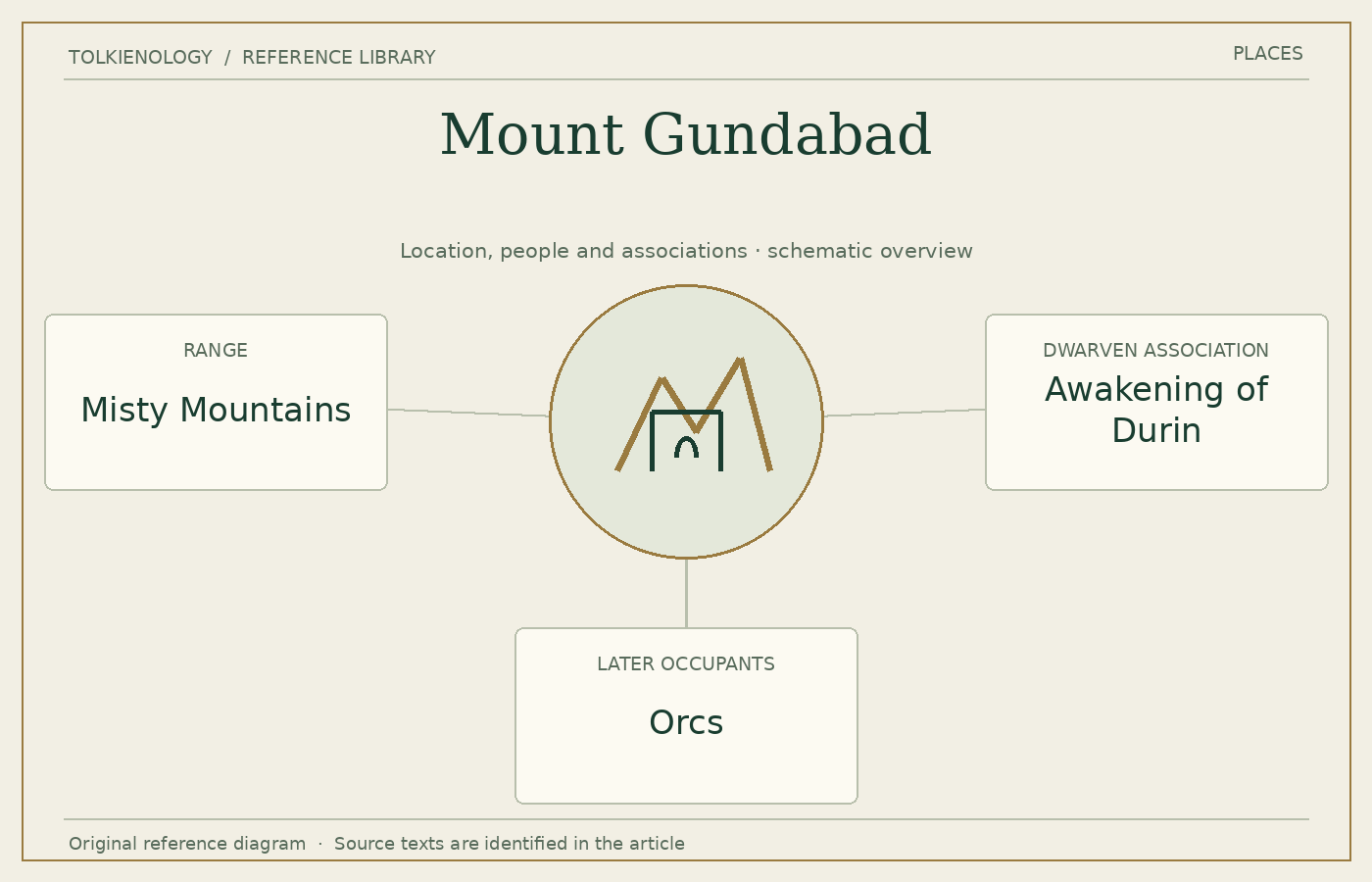
A sacred beginning and a later occupation
The mountain’s significance to Durin’s people is explained in the later histories of the Dwarves. This gives a depth to their hostility towards its Orc occupants that is not visible from a list of strategic passes alone. A place can be valuable even when it is not the current seat of a kingdom.
Its position near the northern meeting of mountain regions also connects the movements of enemies across a wider area. It should not be confused with Erebor, which lies apart from the Misty Mountains, or with the Iron Hills from which Dáin’s company comes.
A name within the goblins' wider world
The northern goblin forces in The Hobbit belong to a network extending beyond the tunnels crossed by Bilbo’s companions. Gundabad helps explain the gathering of a larger army after the death of the Great Goblin and the spreading news of Smaug’s fall.
The films give the mountain additional visual and military prominence. Those scenes may be useful when discussing production design, but specific buildings, troop movements or character visits need to be distinguished from the books’ account.
An encyclopedia should therefore combine the literary battle context with the named supplementary source for Dwarven tradition. Doing so avoids two opposite errors: treating Gundabad as an Orc place with no earlier history, or treating the earlier sacred association as evidence that it remained continuously inhabited by Dwarves through all later Ages.
Primary references
The Hobbit, “The Clouds Burst”; The Lord of the Rings, Appendix A, “Durin’s Folk”; The Peoples of Middle-earth, “Of Dwarves and Men”.