Contents of this entry
A ruined neighbour of a lost kingdomRestoration and the northern warPrimary referencesRelated encyclopedia entries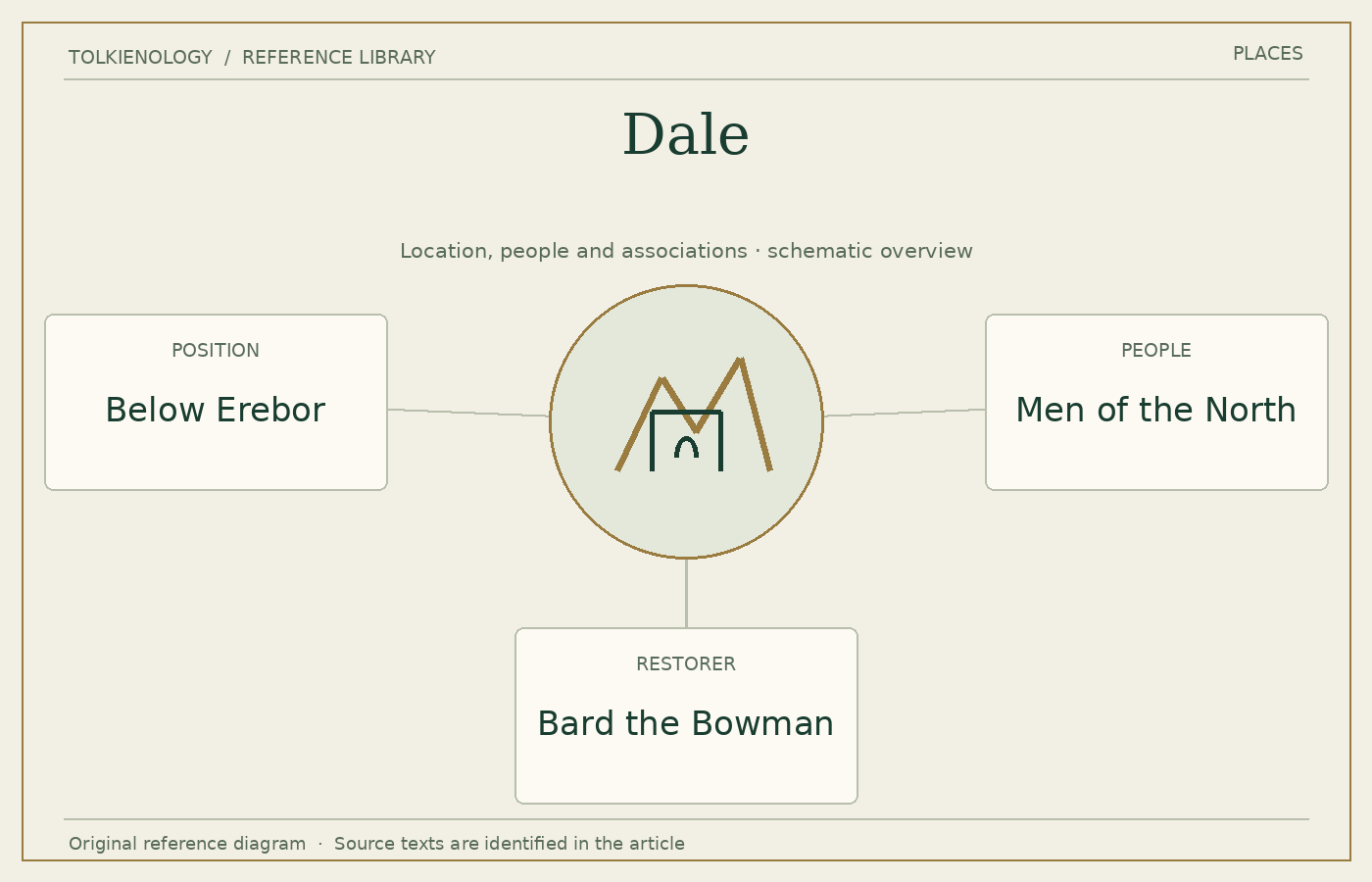
A ruined neighbour of a lost kingdom
Before Smaug’s attack, Dale and the Dwarves under the Mountain are connected by exchange and proximity. The dragon destroys more than one royal household or treasury: the attack breaks an inhabited regional world. Survivors and descendants continue their lives elsewhere, including around Lake-town.
This background gives Bard’s claims after Smaug’s death a foundation distinct from Thorin’s. The hoard has a history involving wealth drawn from different sources, while the surviving human community faces urgent needs. Treating the dispute as a simple contest between rightful Dwarves and greedy outsiders loses those differences.
Restoration and the northern war
Bard rebuilds Dale after the Battle of Five Armies, and the restored community develops a renewed relationship with Erebor. The prosperity later recalled at Rivendell depends on cooperative settlement, not just the elimination of the dragon.
During the War of the Ring, Brand, Bard’s descendant, and Dáin die in the defence of the northern lands. Resistance continues at the Mountain, and the recovery after Sauron’s fall belongs to the wider victory outside Gondor. The Appendices record this history beyond the main travellers’ view.
Dale and Esgaroth should remain separate entries or clearly differentiated subjects. Lake-town provides one setting of survival and movement; Dale is the older settlement and restored kingship nearer the Mountain. Conflating them makes Bard’s movement from archer to restorer of an ancestral realm harder to understand.
Primary references
The Hobbit, “A Warm Welcome”, “Fire and Water” and “The Return Journey”; The Lord of the Rings, Book II, “The Council of Elrond”; Appendix B, the War of the Ring in the north.