Contents of this entry
From Azanulbizar to the Lonely MountainA restored kingdom under renewed attackPrimary referencesRelated encyclopedia entries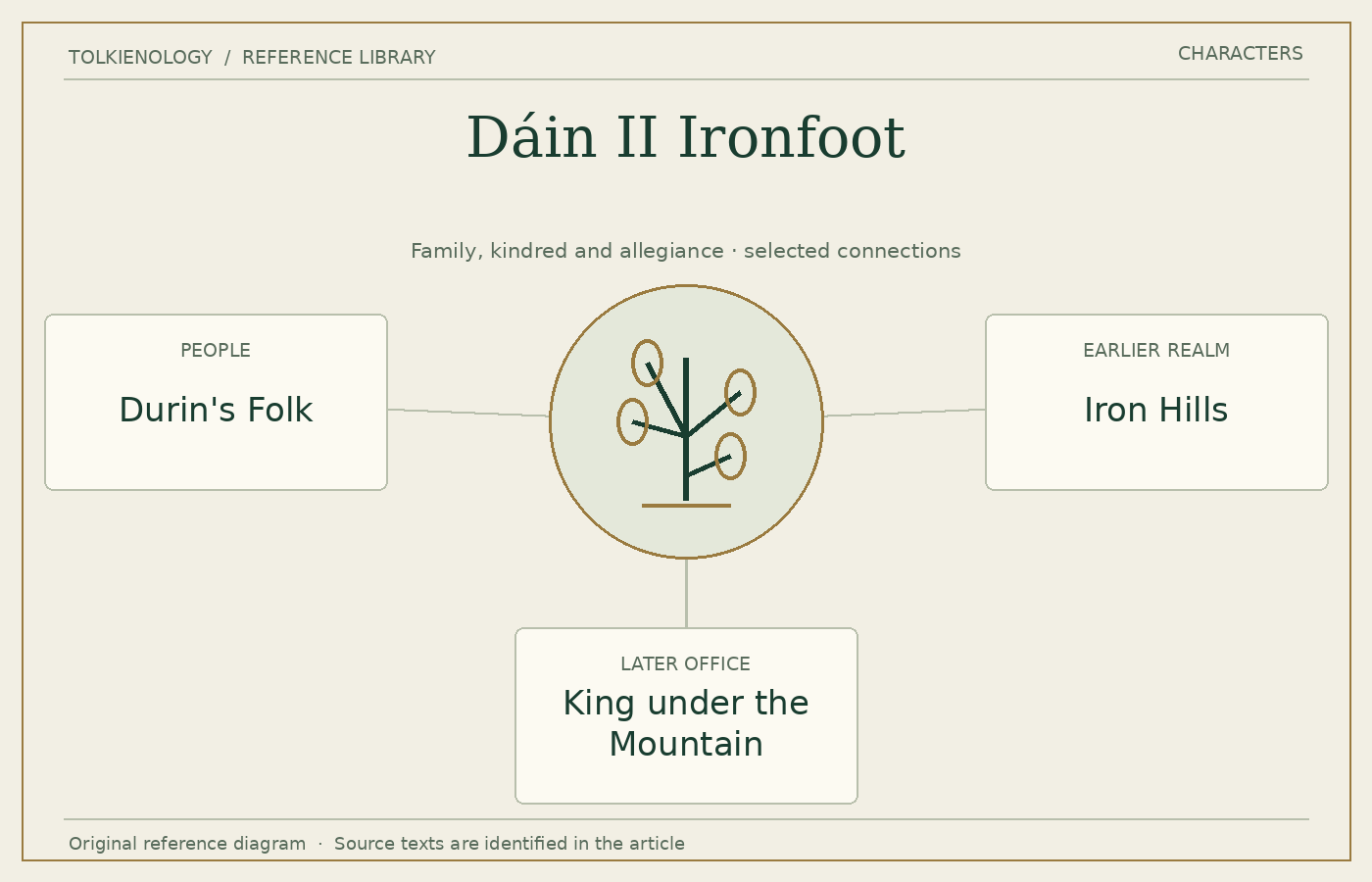
From Azanulbizar to the Lonely Mountain
Dáin earns renown while still young at the Battle of Azanulbizar, where he kills Azog. His perception of the terror within Moria helps prevent a premature attempt to reclaim the ancient kingdom. Military success therefore does not lead him to assume that every apparently available conquest is wise.
In The Hobbit, he comes from the Iron Hills in response to Thorin’s call. The resulting confrontation with Men and Elves might have become a battle over the treasure, but the arrival of a common enemy forces a different alignment. Dáin’s people play a major part in the Battle of Five Armies.
A restored kingdom under renewed attack
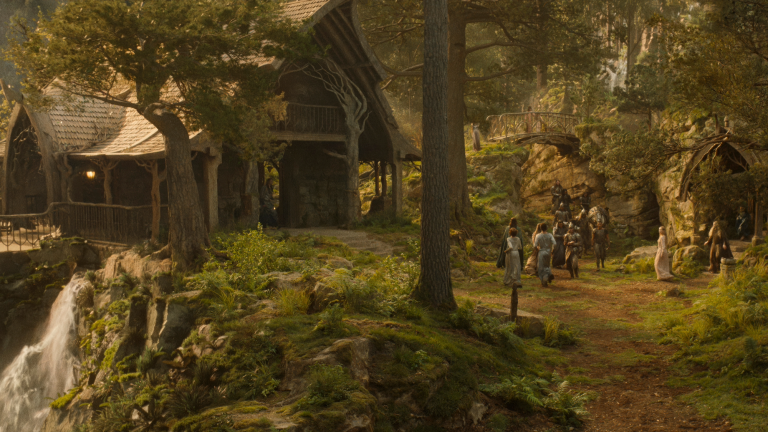
After Thorin’s death, Dáin becomes King under the Mountain. His settlement honours obligations and helps establish the relationship between the restored Dwarven realm and Dale. In the years before the War of the Ring, Sauron’s emissary attempts to obtain information about Bilbo and the Ring through threats and offers of reward. Dáin delays answering and sends to Rivendell for counsel.
During the war, he dies beside King Brand before the gates of Erebor. The northern struggle is not narrated at the same length as the war in Gondor, but the resistance matters to the larger outcome: the defence keeps enemy forces engaged and preserves the allied northern kingdoms.
His title should not make him merely a symbol of hardness. Across the separate accounts, restraint, negotiation and recognition of danger are as important as the physical courage for which he is first remembered.
Primary references
The Hobbit, “The Clouds Burst” and “The Return Journey”; The Lord of the Rings, Book II, “The Council of Elrond”; Appendix A, “Durin’s Folk”; Appendix B, War of the Ring chronology.