Contents of this entry
A monument above an underground strongholdThe fall of a landscape of dominationPrimary referencesRelated encyclopedia entries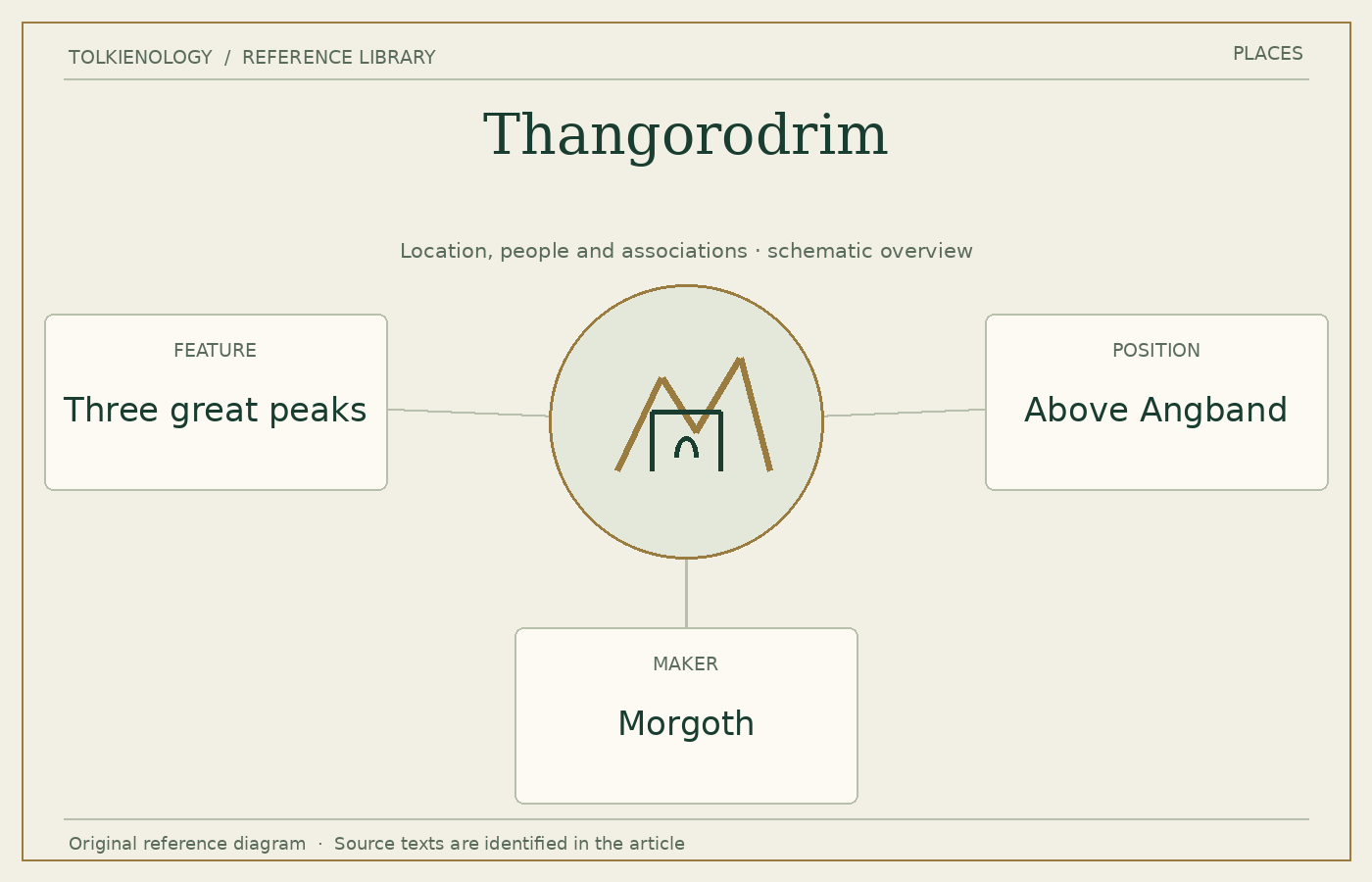
A monument above an underground stronghold
The relationship between Thangorodrim and Angband is essential. The peaks are not simply an alternative name for the whole fortress, even when the narrative uses them to indicate the visible centre of the enemy’s power. Smoke and oppressive heights make the hidden works below perceptible from the lands facing them.
Maedhros is fastened to the mountain as a public expression of helplessness. Fingon’s rescue changes that imposed meaning, allowing the same face of rock to become the setting of assistance across a family division. The place thus carries both a threat and the memory of someone who refuses to accept the threat as final.
The fall of a landscape of domination
Ancalagon’s ruin breaks Thangorodrim during the War of Wrath. The compressed account connects the greatest winged dragon’s fall with the destruction of Morgoth’s monumental stronghold. It does not supply enough measurement to establish an exact geological cross-section or a numerical size for the dragon.
The peaks also stand within a geography that is itself profoundly changed at the end of the Age. Mapping them directly onto a surviving Third Age mountain range would require evidence the narrative does not provide.
For reference purposes, follow the sites through named episodes: Maedhros’s captivity, Fingon’s rescue, the continued northern threat and the final war. This provides firmer understanding than an elaborate modern reconstruction whose apparent precision exceeds the surviving descriptions.
Primary references
The Silmarillion, “Of the Return of the Noldor” and “Of the Voyage of Eärendil and the War of Wrath”; The Lays of Beleriand and The War of the Jewels for related textual developments.