Contents of this entry
A land inhabited by the deathlessWhy arrival does not create immortalityPrimary referencesRelated encyclopedia entries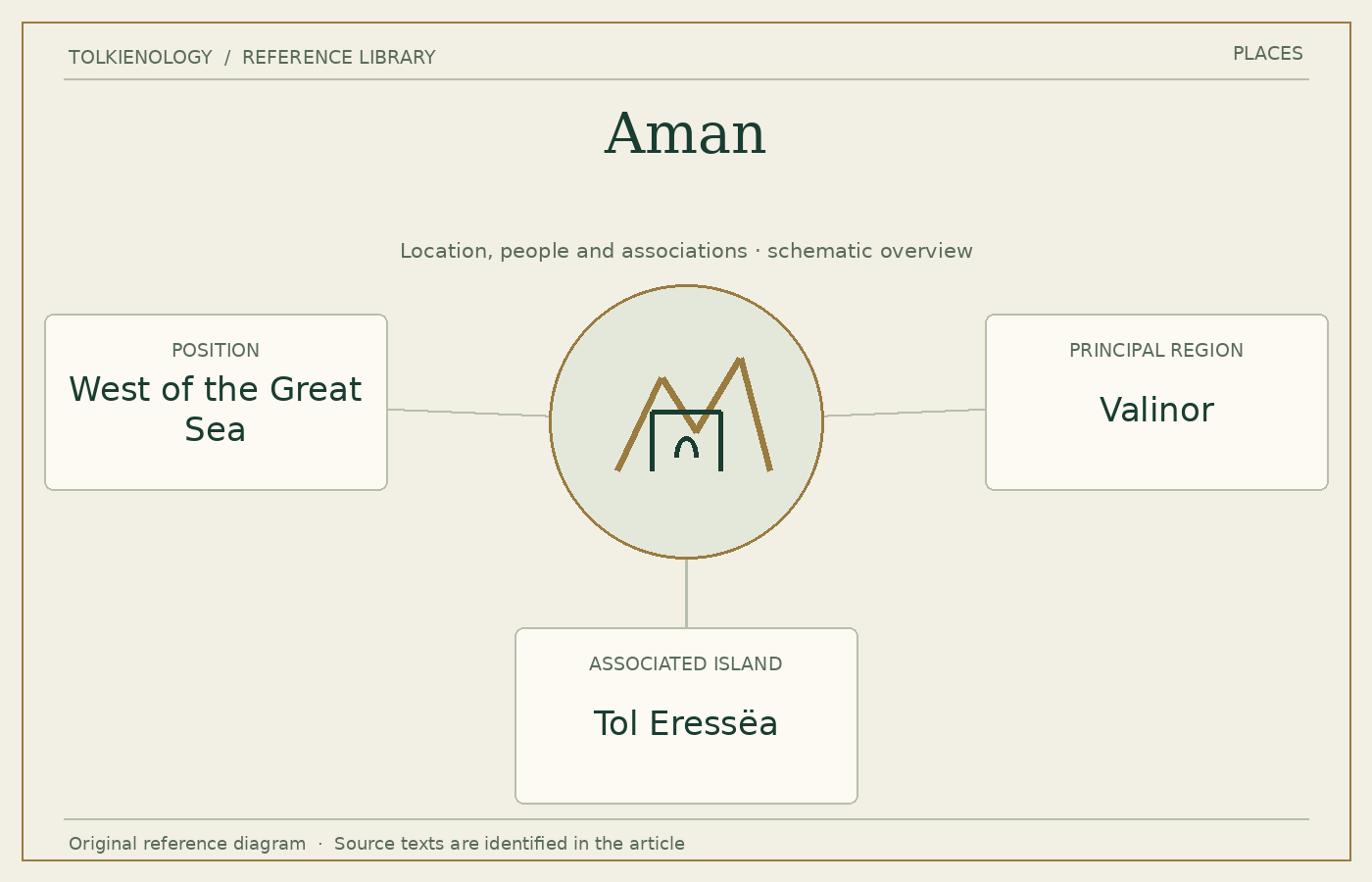
A land inhabited by the deathless
The Valar establish their western dwelling after the destruction of their earlier home. The migration of the Eldar creates a history of cities, shores and different Elven communities within and beside the land. It is not an empty paradise existing only as a destination for later travellers.
Its separation from Middle-earth changes across Tolkien’s cosmological and narrative histories. The Two Trees, the Darkening, the rebellion of the Noldor and the later voyages all belong to different conditions of access. A reference description should specify the period rather than flatten the whole history into one permanent border arrangement.
Why arrival does not create immortality
The land does not make mortals immortal. The title “Undying Lands” refers to its principal inhabitants, not a power by which any visitor can acquire the Elven fate. This distinction is central to the temptation of Númenor’s kings and to the misunderstanding exploited by Sauron.
At the Downfall of Númenor, the world is changed and Aman is removed from the ordinary routes of mortal sailing. The Straight Road belongs to that altered relationship. Later permissions for particular Ring-bearers should be treated as exceptional gifts, not evidence that the prohibition was merely a test of seamanship.
Tolkien’s writings include reconsiderations of the world’s shape and early history. The published Silmarillion supplies one principal narrative framework; the later discussions in Morgoth’s Ring and The Nature of Middle-earth require their own labels when an account moves beyond it.
Primary references
The Silmarillion, “Of the Beginning of Days”, “Of Eldamar and the Princes of the Eldalië” and “Akallabêth”; The Lord of the Rings, Appendix A, “The Númenórean Kings”.