Contents of this entry
An island used for a journeyAvallónë and the changing frame of the talesPrimary referencesRelated encyclopedia entries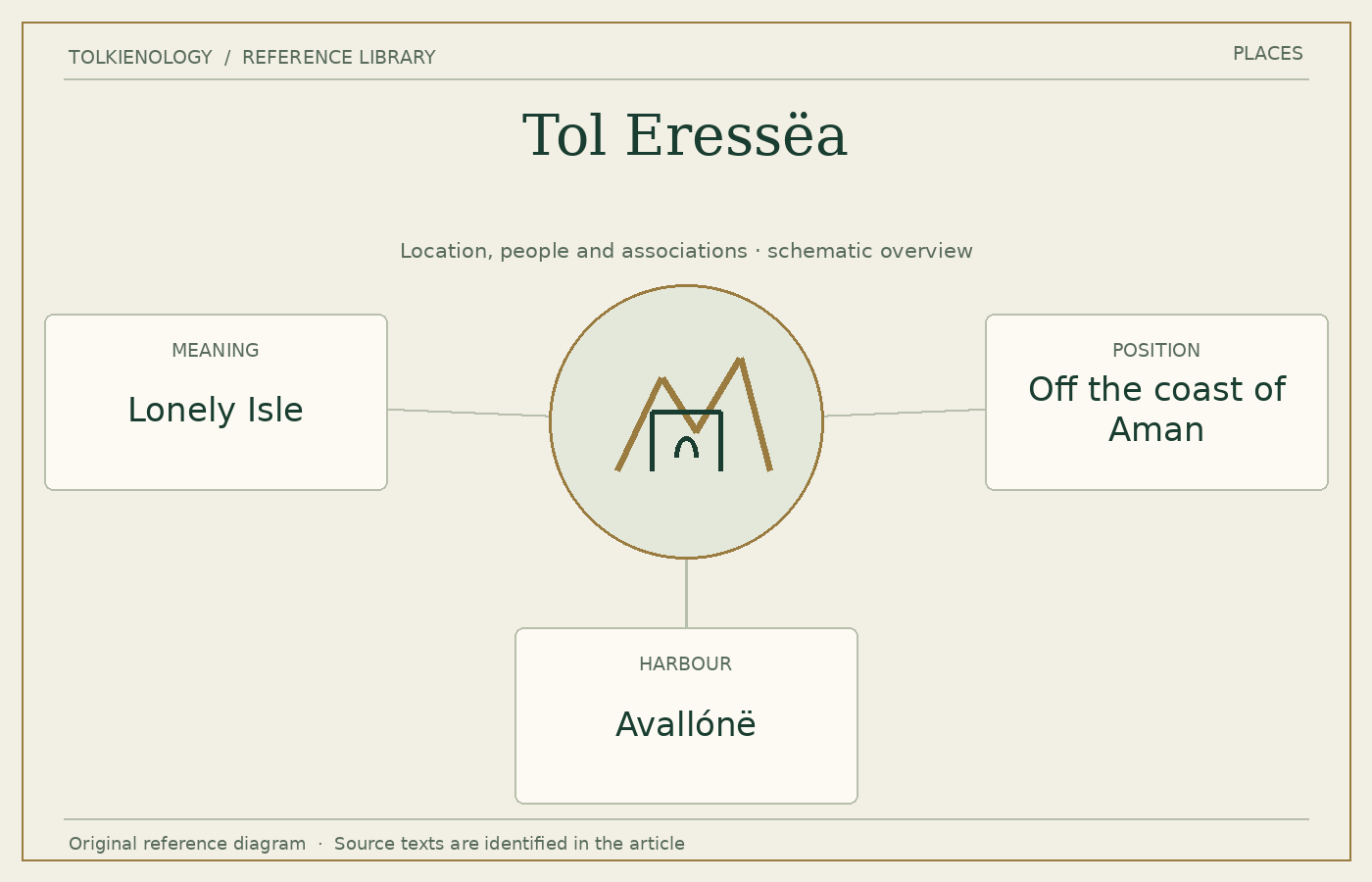
An island used for a journey
In the published mythology, Ulmo uses the island to convey the Eldar across the Great Sea. Its eventual anchoring in the Bay of Eldamar creates a place that is part of the western Elven world while remaining distinct from the mainland.
The Teleri’s dwelling there and their later movement towards the coast of Aman belong to the differentiated history of the Eldar. “The Elves went west” is therefore an inadequate summary of a migration involving delays, separations, different destinations and communities that do not all make the same choices.
Avallónë and the changing frame of the tales
Avallónë becomes the island’s best-known haven in the later accounts. References to western sight, gifts and the memories of Númenor make the island significant beyond the initial crossing. After the Downfall, it shares the changed relation of the Undying Lands to the ordinary world.
The early Book of Lost Tales gives Tol Eressëa a much more elaborate role in the framing through which a human traveller hears the Elves’ stories. That literary frame should not automatically be imported into the later Silmarillion as though it survived unchanged.
The distinction illustrates a useful research principle: a place can persist across decades of writing while its narrative purpose changes substantially. Readers interested in those changes should compare named texts rather than trying to combine every statement into one seamless itinerary. The island’s several functions are part of Tolkien’s developing art as well as its imagined history.
Primary references
The Silmarillion, “Of Eldamar and the Princes of the Eldalië” and “Akallabêth”; The Book of Lost Tales, Parts One and Two, for the early narrative framework.