Contents of this entry
The last defence of AngbandGreatness is not a numerical scalePrimary referencesRelated encyclopedia entries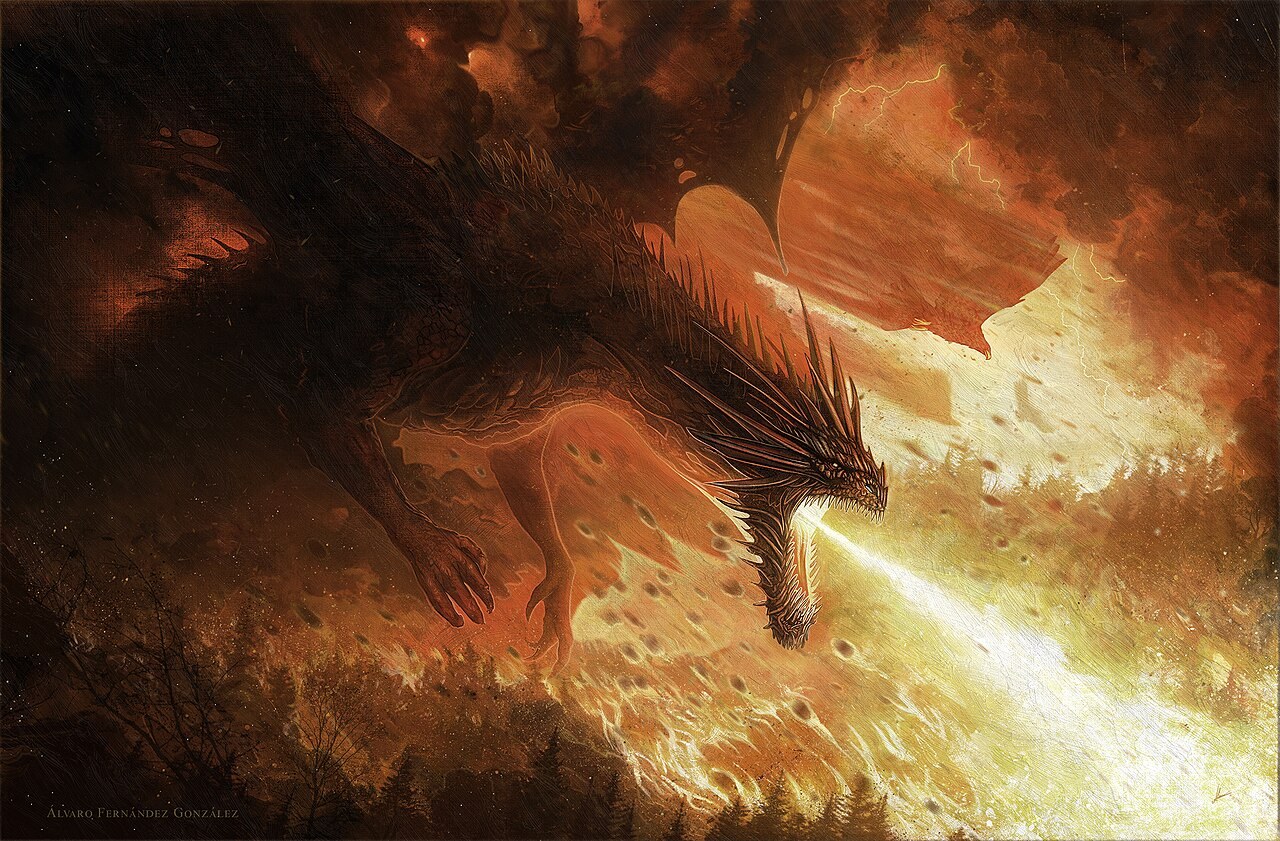
The last defence of Angband
When Morgoth’s other forces can no longer hold back the host attacking Angband, the winged dragons emerge as a final great weapon. Their assault reverses the immediate progress of the battle. Eärendil arrives in Vingilot, aided by the Eagles, and confronts the dragon host from the air.
Ancalagon falls before Eärendil, and his ruin breaks the towers of Thangorodrim. The image joins the destruction of a terrifying creature to the collapse of the landscape through which Morgoth has displayed his dominion. It is one of the concentrated passages in which the mythology describes world-changing events without the step-by-step pacing of a later novel.
Greatness is not a numerical scale
The text does not provide a measured wingspan or body length. Attempts to calculate an exact size from the breaking of Thangorodrim turn a compressed mythic description into a form of technical evidence it does not supply. An encyclopedia can explain the scale implied by the episode without inventing a number.
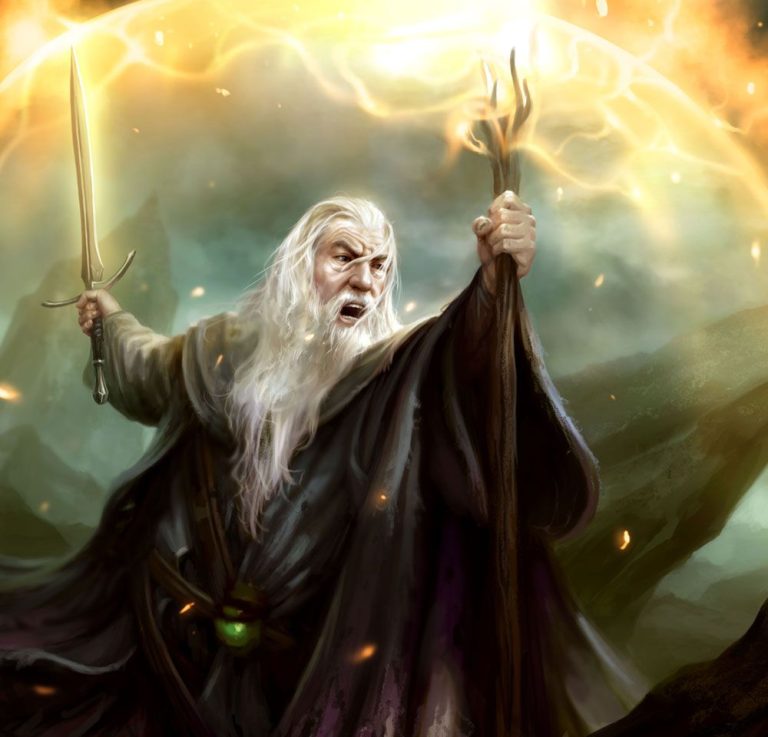
Ancalagon is also mentioned in The Lord of the Rings when Gandalf explains the limits of dragon-fire in relation to the One Ring. That reference places a near-forgotten terror inside the later characters’ understanding of dangerous things.
He should be distinguished from Glaurung, whose long involvement in the wars and the tragedy of Húrin’s children is much more extensively narrated. Shared service to Morgoth does not make the two dragons interchangeable in narrative role, anatomy or the surviving amount of information.
Primary references
The Silmarillion, “Of the Voyage of Eärendil and the War of Wrath”; The Lord of the Rings, Book I, “The Shadow of the Past”.