Contents of this entry
A ring of stone around an older towerThe Ents and the end of commandPrimary referencesRelated encyclopedia entries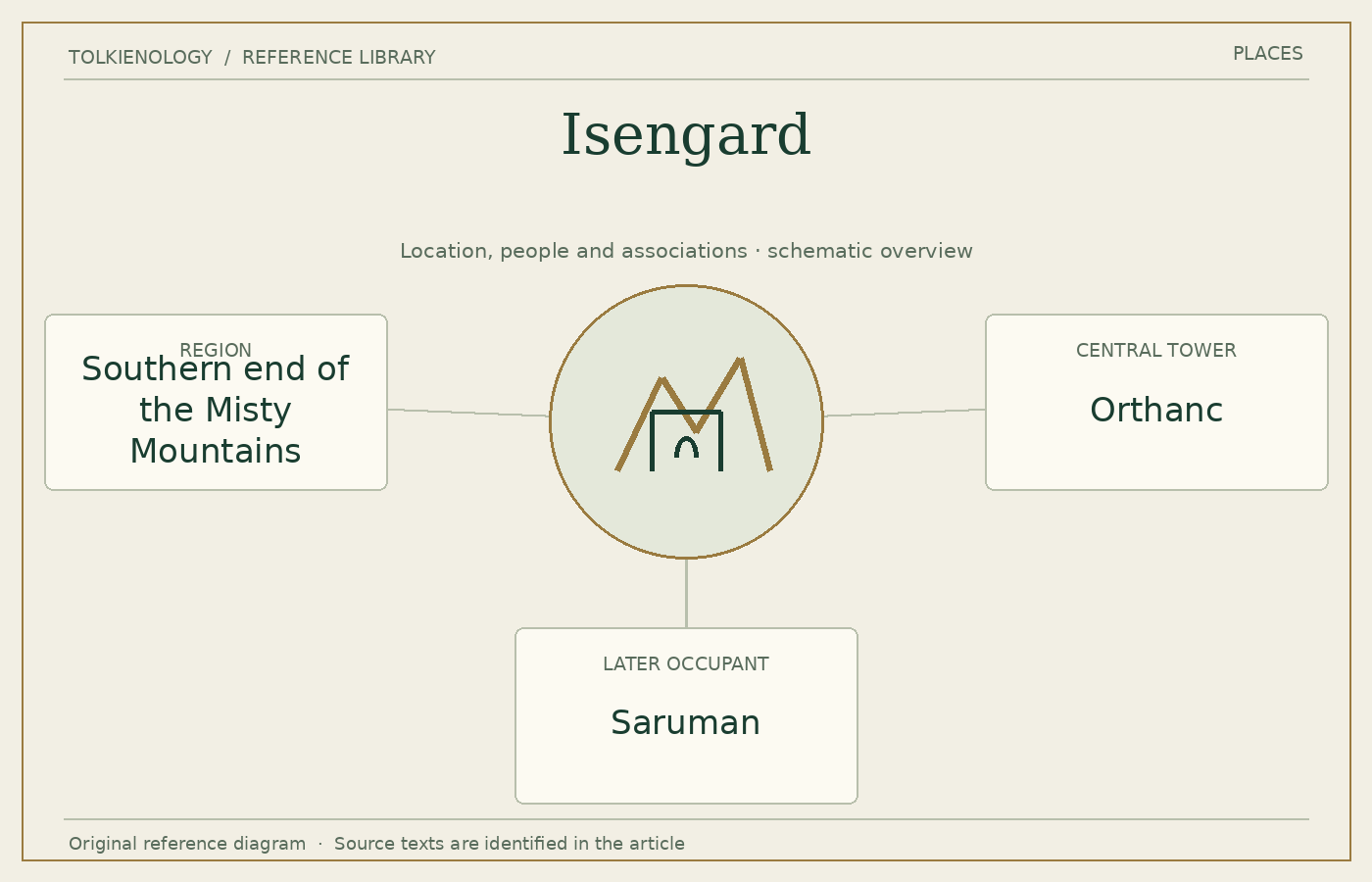
A ring of stone around an older tower
The enclosure and the tower are not interchangeable names. Orthanc stands within Isengard, while the circle, gates, approaches and surrounding land provide the greater fortified setting. Saruman’s occupation takes advantage of structures older than his own military project.
Under his rule, gardens and trees give way to pits, workshops and the requirements of a growing army. The change is narrated through its effects on land and labour, not simply through a preference for a darker architectural style. His hostility towards Rohan also operates through political manipulation beyond the stronghold’s walls.
The Ents and the end of command
The Ents destroy the works of Isengard and redirect water into its pits. The attack differs from a conventional siege because it answers the conversion of living country into a store of materials. Orthanc itself resists their force, demonstrating the distinction between Saruman’s destructive additions and the older tower.
The meeting with the defeated Wizard then shifts the conflict back towards speech. A ruined army does not prevent Saruman from attempting to control his listeners through promises, accusations and selective accounts of responsibility.
After the war, the reordering of the place includes the possibility of growth again. The history should therefore follow both destruction and renewal. Treating Isengard as a permanent machine-land obscures the contrast between an ancient site, a particular occupation and the different future that becomes possible once that occupation ends.
Primary references
The Lord of the Rings, Book II, “The Council of Elrond”; Book III, “Treebeard”, “The Road to Isengard”, “Flotsam and Jetsam” and “The Voice of Saruman”.