Contents of this entry
Ships refused and takenThe first violence does not remain localPrimary referencesRelated encyclopedia entries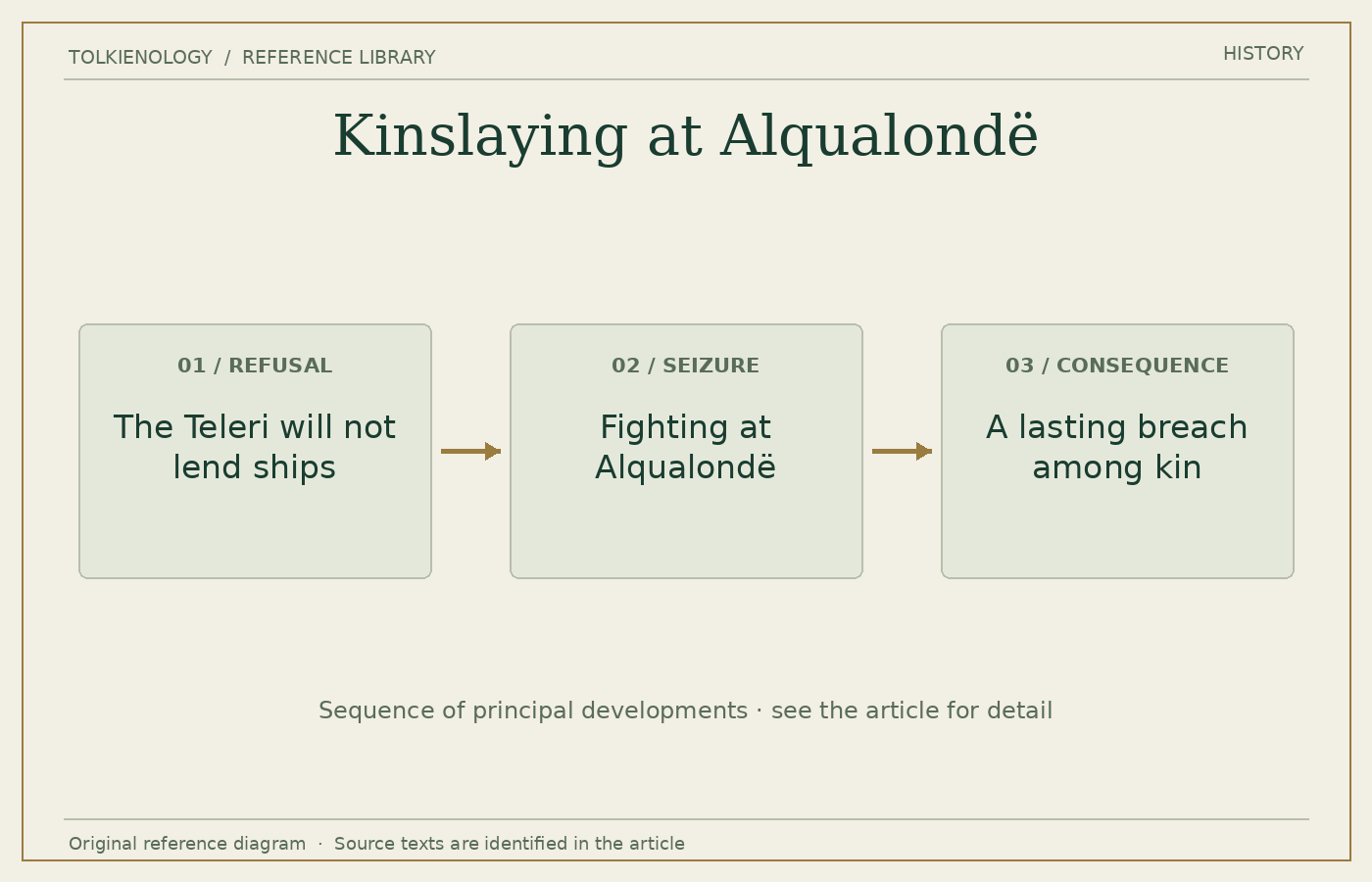
Ships refused and taken
The Teleri will not lend their vessels to support the revolt. For them, the ships are works of craft and love, not interchangeable transport that anyone with an urgent cause may rightfully requisition.
Fëanor’s attempt to take them leads to fighting. Later arrivals from the following Noldorin host become involved under conditions of incomplete understanding, an important complication when tracing responsibility through the separate companies. A reference should not make every person on the road an identical participant with identical knowledge.
The first violence does not remain local
The stolen ships carry a continuing division. Fëanor later burns them at Losgar, leaving Fingolfin’s people to the crossing of the ice. Knowledge of the Kinslaying also changes Thingol’s relationship with the exiles in Beleriand, including his prohibition on Quenya within his realm.
The event is commonly called the First Kinslaying to distinguish it from the later assaults on Doriath and the Havens of Sirion. Those later attacks concern the Silmarils more directly, but they continue a history in which an overriding claim is used to justify violence against other Elves.
Tolkien’s later writings contain differences concerning individual participants and the movements of particular members of the royal house. Such variants should be identified through their source rather than used to produce a definitive modern attendance list. The secure core remains the seizure, the deaths and the lasting breach between a professed liberation and the means chosen to pursue it.
Primary references
The Silmarillion, “Of the Flight of the Noldor”; The Peoples of Middle-earth, “The Shibboleth of Fëanor”; Unfinished Tales, “The History of Galadriel and Celeborn”, for later variants.