Contents of this entry
The appeal beyond BeleriandDefeat and irreversible changePrimary referencesRelated encyclopedia entries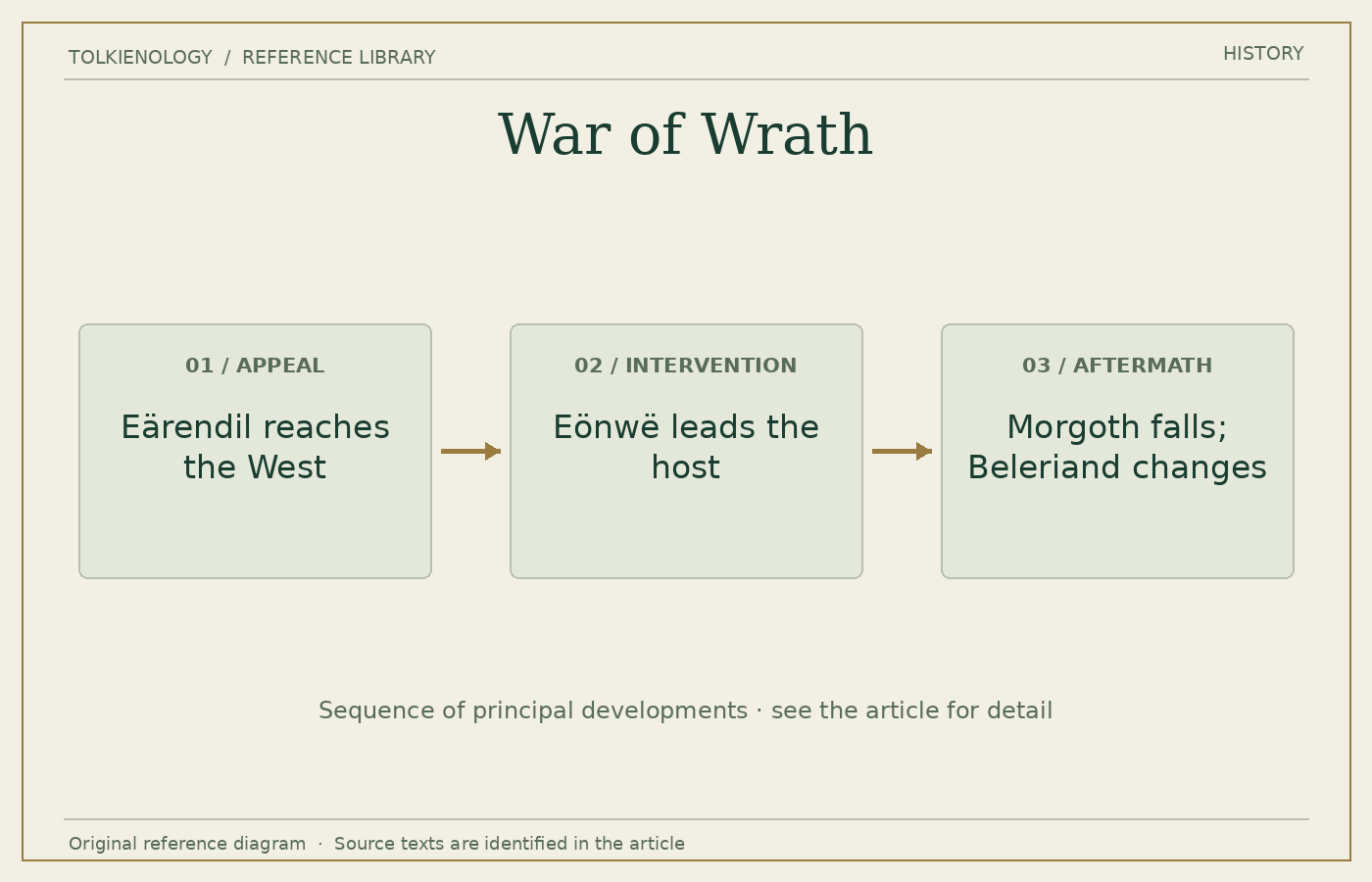
The appeal beyond Beleriand
Eärendil reaches the West with the Silmaril and pleads for both Elves and Men. His journey answers a situation in which the surviving peoples of Beleriand can no longer obtain deliverance through the military arrangements that have repeatedly failed them.
The host from the West is led by Eönwë, the herald of Manwë. It should not automatically be described as every Vala personally taking the field. Distinguishing the authority behind an intervention from the actors specifically named in the fighting prevents an evocative title from becoming an invented order of battle.
Defeat and irreversible change
Morgoth releases the winged dragons near the end of the struggle. Eärendil and the Eagles confront them, and Ancalagon’s fall breaks Thangorodrim. Angband is overthrown, Morgoth is captured and the remaining Silmarils enter the final catastrophe of Maedhros and Maglor.
The conflict leaves much of Beleriand submerged or otherwise transformed. That cost explains the radically different map of the following Age. Victory does not mean that the earlier kingdoms can simply resume their interrupted lives in their old places.
Sauron’s survival and the foundation of Númenor connect the ending with new histories. One enemy’s decisive defeat does not remove every consequence of the world he has shaped. The compressed telling should also discourage false precision: the account does not support an exhaustive day-by-day campaign narrative or exact numbers for all the opposing forces.
Primary references
The Silmarillion, “Of the Voyage of Eärendil and the War of Wrath”, followed by “Akallabêth” and “Of the Rings of Power and the Third Age”.