Contents of this entry
The Elvenking and Thorin's companyA kingdom with a longer historyPrimary referencesRelated encyclopedia entries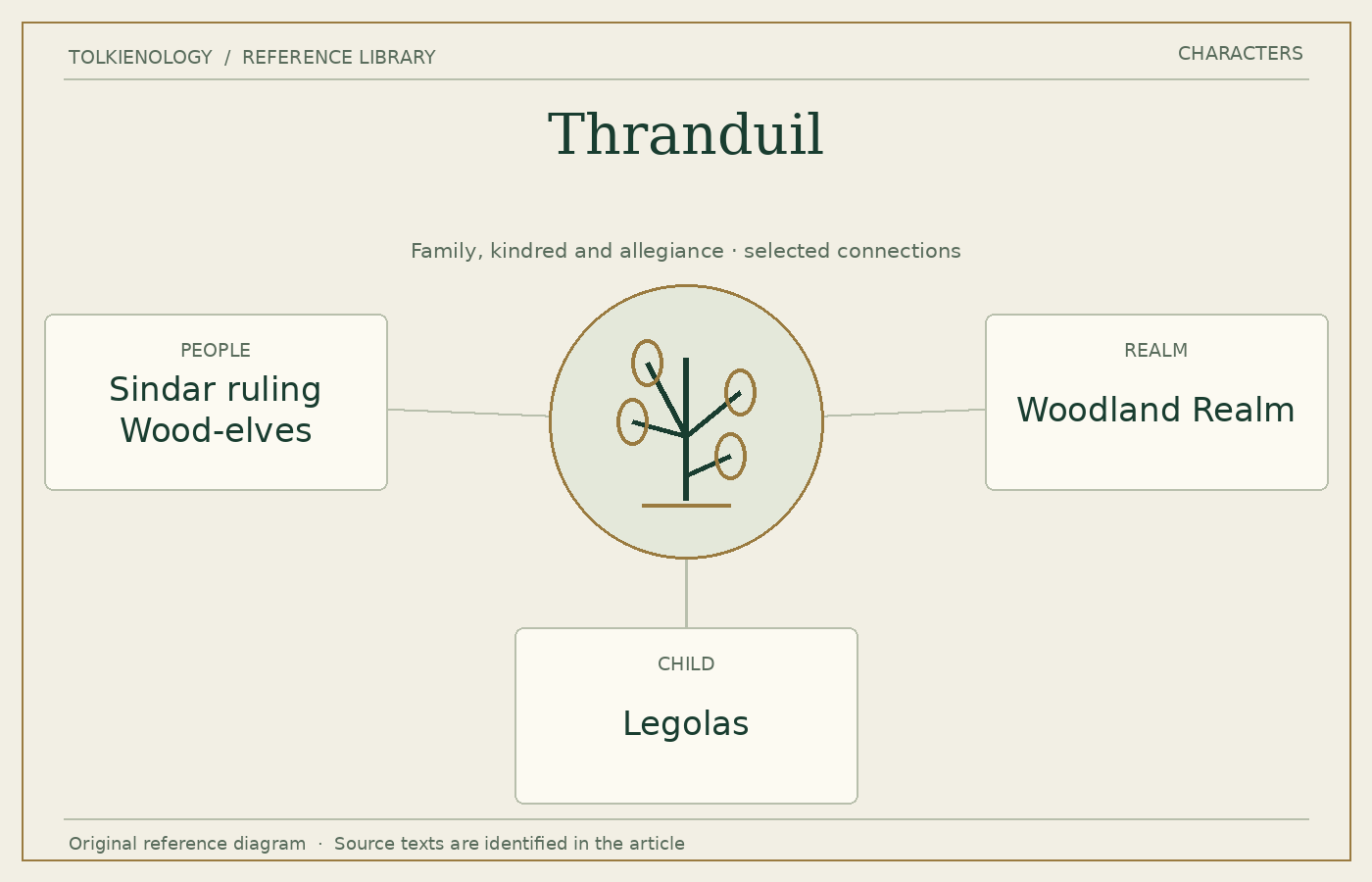
The Elvenking and Thorin's company
In The Hobbit, the king is not named within the principal narrative. He imprisons the Dwarves after their refusal to explain their purpose, creating the conditions for Bilbo’s rescue through the barrel escape. The episode depends on mistrust and incomplete information, not simply on one people’s inherent hostility towards another.
After Smaug’s death, the Elvenking comes into the dispute around the Mountain. His assistance to the people of Lake-town and his unwillingness to rush into battle for treasure complicate the picture of a ruler motivated only by acquisition. The later common battle gives practical shape to an alliance that the treasure dispute had made difficult.
A kingdom with a longer history
The name Thranduil is supplied by The Lord of the Rings, while Unfinished Tales offers additional background about the Silvan Elves and his father Oropher. These writings place the northern realm within histories older than Bilbo’s visit.
Legolas’s report at Rivendell concerns Gollum’s escape from the Wood-elves’ custody. During the War of the Ring, Thranduil’s realm also fights its own struggle in the north, beyond the principal travellers’ direct experience. The later arrangement of the forest belongs to the renewal after Sauron’s fall.
Film additions concerning a particular wound, romances and court relationships must be labelled as adaptation material. They cannot fill gaps in Tolkien’s account merely because the films supply a memorable visual performance of the king.
Primary references
The Hobbit, “Flies and Spiders”, “Barrels Out of Bond” and the final Mountain chapters; The Lord of the Rings, Book II, “The Council of Elrond”, and Appendix B; Unfinished Tales, “The History of Galadriel and Celeborn”, appendices on the Silvan Elves.