Contents of this entry
A mortal visitor to GondolinThe withdrawal that preserves a futurePrimary referencesRelated encyclopedia entries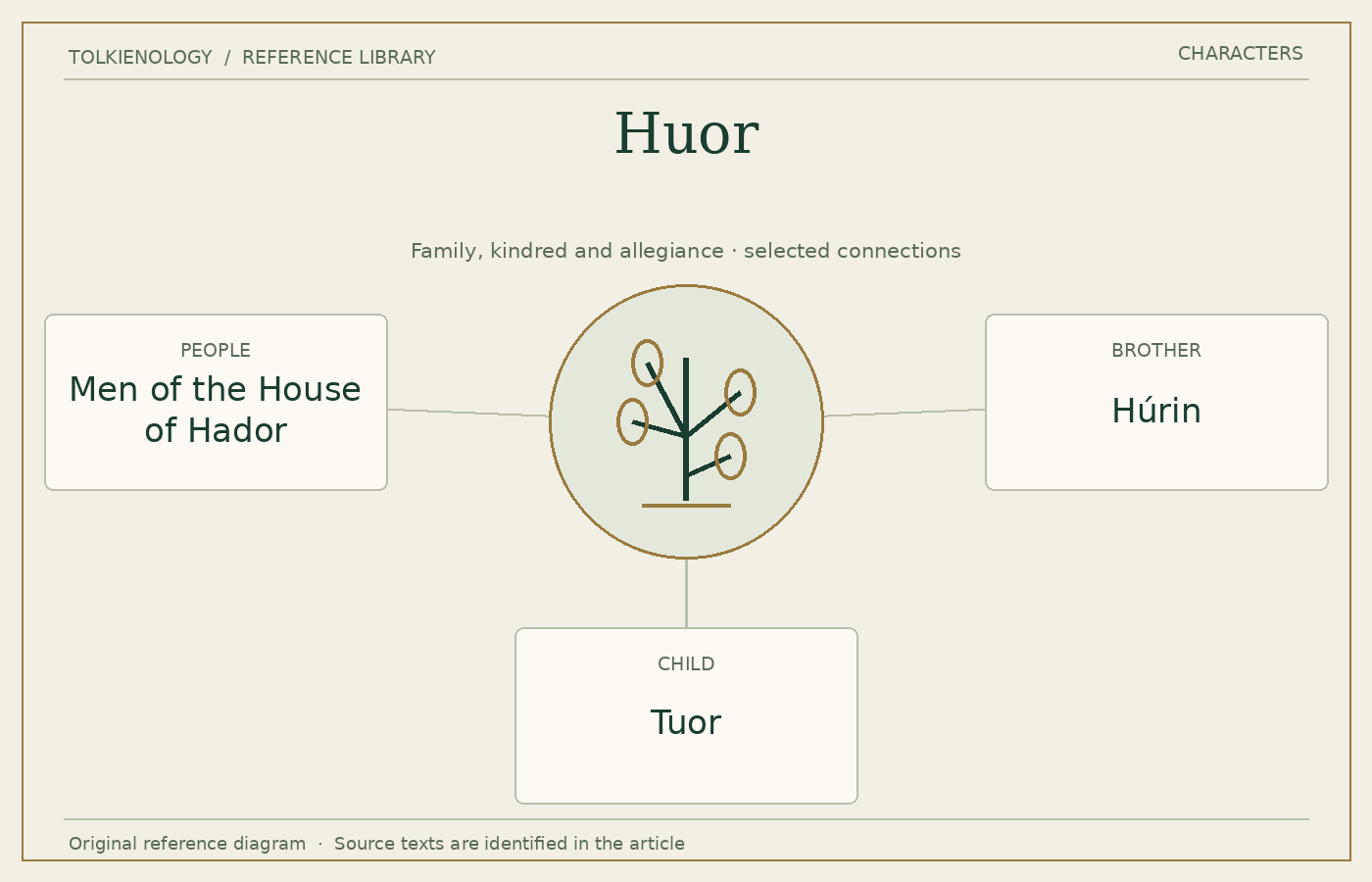
A mortal visitor to Gondolin
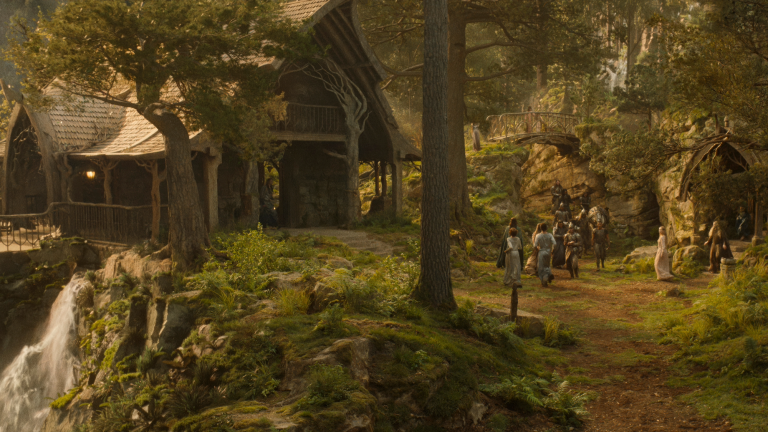
In their youth, Huor and Húrin reach Gondolin with the help of Eagles after being separated from their companions in war. Turgon grows attached to them but allows their return, under an obligation not to reveal the city’s location. This earlier hospitality gives the brothers a personal relationship with the king they later protect.
Huor’s marriage to Rían belongs to a brief interval before the great battle. Tuor is born after his father’s death, so the father-son relationship is carried through inheritance and the actions of others rather than through remembered upbringing.
The withdrawal that preserves a future
At the Nirnaeth Arnoediad, Huor urges Turgon to escape and speaks of hope arising from their houses. Huor dies in the defence that makes that withdrawal possible. His words later acquire a precise significance through Tuor’s marriage to Idril and the birth of Eärendil.
This is not the same as describing Huor as someone who knows a complete future history. Prophetic recognition and limited present knowledge coexist. He still acts within an immediate military disaster, judging that the survival of another people matters even when his own position cannot be saved.
The contrast with Húrin is important. One brother falls on the field; the other survives into a captivity that becomes another form of tragedy. Together their stories show why death in battle and continued life cannot be used as simple measures of success or failure in the First Age narratives.
Primary references
The Silmarillion, “Of the Ruin of Beleriand and the Fall of Fingolfin”, “Of the Fifth Battle: Nirnaeth Arnoediad” and “Of Tuor and the Fall of Gondolin”; The Children of Húrin, opening chapters.