Contents of this entry
Knowledge and the burden of ruleThe collapse of judgementPrimary referencesRelated encyclopedia entries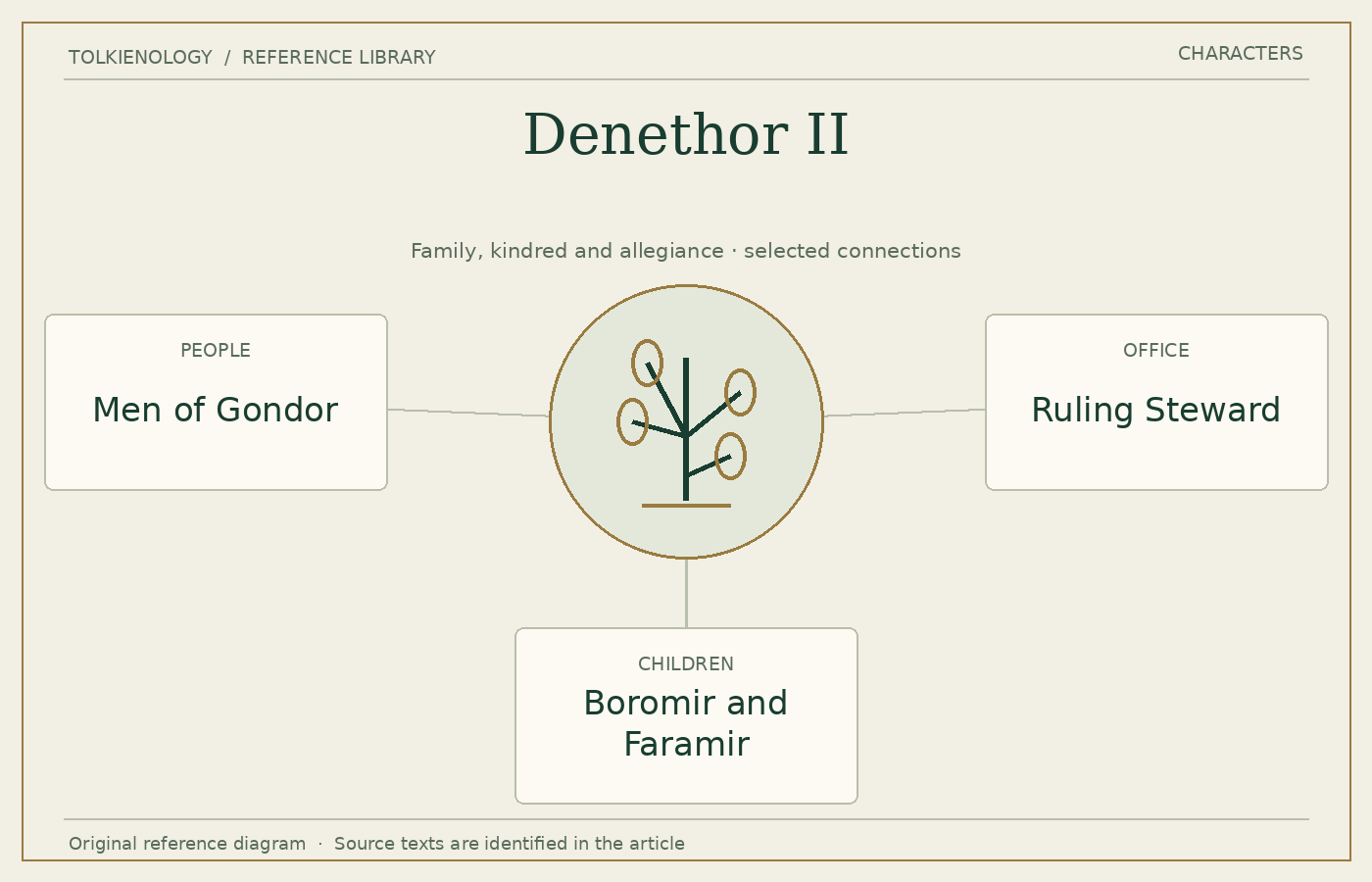
Knowledge and the burden of rule
Denethor receives Gandalf and Pippin in Minas Tirith after Boromir’s death. He recognises more of the political and military situation than the visitors initially disclose. His rule is not simply a period of inactivity awaiting Aragorn: Gondor has continued to resist Mordor under the Stewards, and Denethor regards the survival of that resistance as his responsibility.
His use of the palantír is crucial. Sauron cannot straightforwardly turn the stone into a machine that only produces lies, but he can expose Denethor to selected realities and use the resulting imbalance of knowledge to encourage hopelessness. Understanding how an enemy shapes the available evidence matters more here than a simple opposition between truth and falsehood.
The collapse of judgement
Faramir’s apparent death concentrates Denethor’s accumulated grief and fear. He attempts to burn both himself and his still-living son rather than allow the future to arrive on terms he cannot accept. Gandalf’s intervention distinguishes a Steward’s legitimate responsibility from any right to determine another person’s death in despair.
The tragedy should not be flattened into the claim that Denethor is merely cowardly or indifferent to Gondor. His strength, pride and long resistance make the collapse consequential. Nor should his relationship with Faramir be described entirely through a film scene: the book’s language, the hidden use of the stone and the conflict over returning kingship provide a more complicated setting.
Denethor II must also be distinguished from the First Age Elf of the same name. The numeral identifies a Gondorian succession, and this entry concerns the Steward rather than the leader of the Green-elves.
Primary references
The Lord of the Rings, Book V, “Minas Tirith”, “The Siege of Gondor” and “The Pyre of Denethor”; Appendix A, “Gondor and the Heirs of Anárion”; Unfinished Tales, “The Palantíri”.