Contents of this entry
Making a kingdom and recognising new neighboursA promise kept beyond political conveniencePrimary referencesRelated encyclopedia entries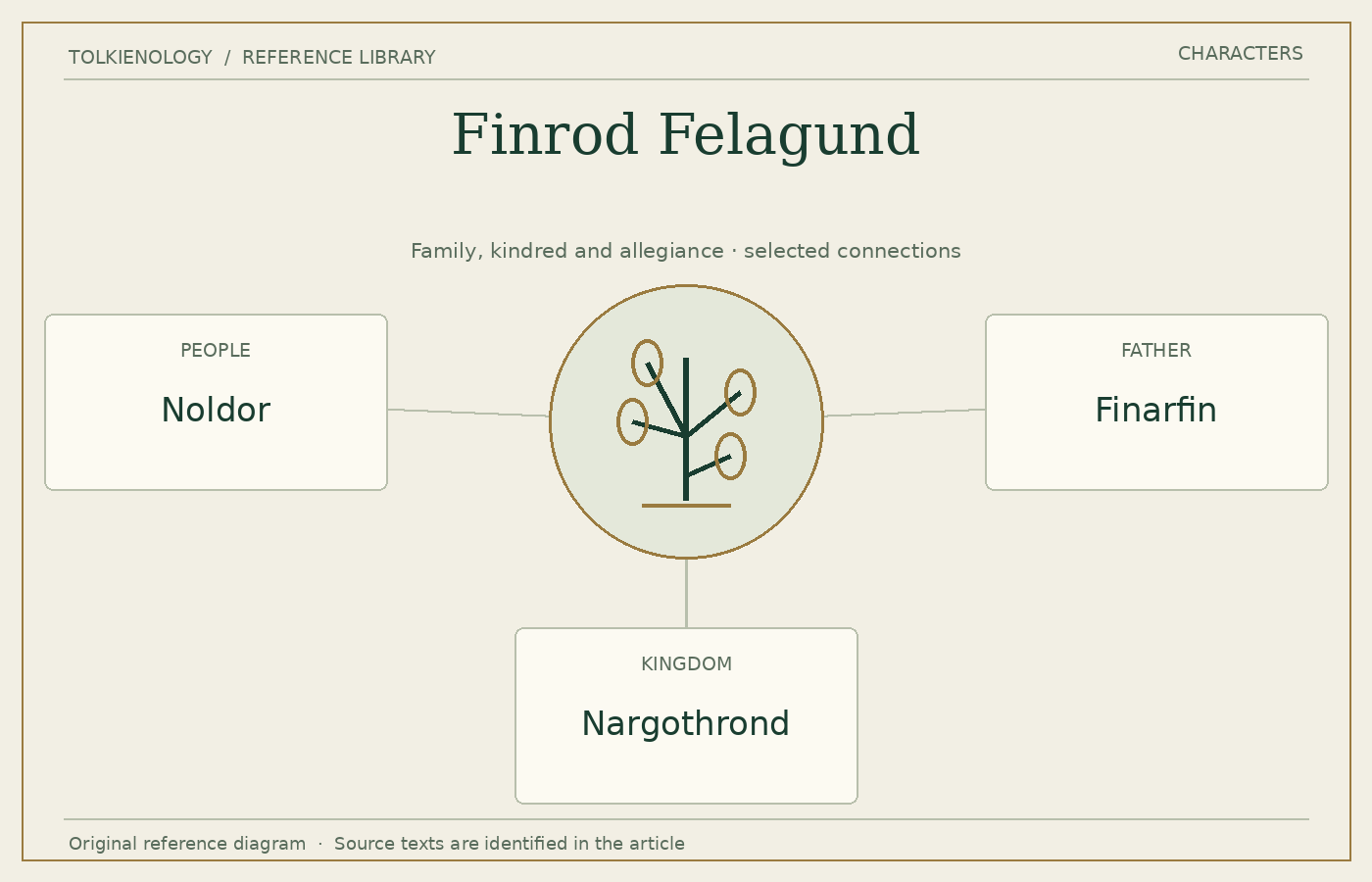
Making a kingdom and recognising new neighbours
Finrod establishes Nargothrond beside the Narog, with the aid of Dwarven craftsmanship in the making of its underground halls. His title Felagund is associated with that work. The kingdom combines concealment, art and political reach; it is not merely a refuge outside the conflicts of the Noldor.
He is also important in the first encounters between the Elves of Beleriand and the newly arrived Men. Listening and learning precede an alliance. These scenes distinguish his response from the suspicion or instrumental treatment that strangers might otherwise meet.
During the Dagor Bragollach, Barahir saves Finrod’s life. Finrod gives a ring as a token of the resulting bond and promise of aid. That obligation later reaches him through Barahir’s son Beren, at a moment when helping the visitor threatens his own kingship.
A promise kept beyond political convenience
Finrod leaves Nargothrond with a small company after Celegorm and Curufin turn his people against Beren’s quest. Captured by Sauron, he contests the enemy through a struggle in song, but the company is overcome. He dies protecting Beren from a wolf, fulfilling the personal promise when larger political support has failed.
His story sets a freely undertaken obligation beside the destructive oath of Fëanor’s sons. Both bind later action, but they differ in what they demand and in their treatment of other people.
The Athrabeth Finrod ah Andreth, published in Morgoth’s Ring, gives a different kind of encounter with Finrod: a dialogue about the destinies of Elves and Men. That late philosophical text should be named explicitly rather than silently treated as a scene from the published Silmarillion.
Primary references
The Silmarillion, “Of the Noldor in Beleriand”, “Of the Coming of Men into the West” and “Of Beren and Lúthien”; Morgoth’s Ring, “Athrabeth Finrod ah Andreth”.