Contents of this entry
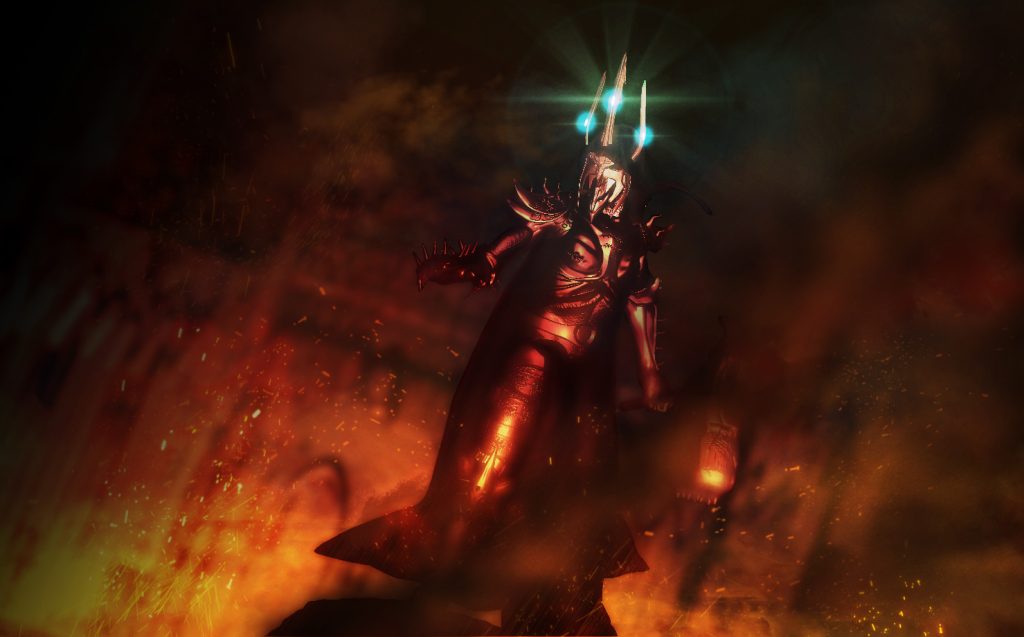
Melkor was the most powerful among Valar but he turned to darkness and forfeited his name which means “He who arises in Might”.
He was the first Dark lord, the main antagonist of The Silmarillion. The Elves named him Morgoth, the Dark Enemy of the World.
Melkor has been interpreted as analogous to Satan, once the greatest of all God’s angels. Even before the First Age, he tried to ruin the harmony of Eru Iluvatar’s work by placing his own themes in the Music of Anuir. Thus he is considered the primordial source of evil in Ea.
He corrupted many spirits and hearts and converted many Maiar into his servants. Sauron was one of the most prominent ones and “he rose as a shadow of Morgoth and a ghost of his malice”.
Melkor began with the desire od Light, but when he could not possess it for himself alone, he descendent through fire and wrath into a great burning, down into Darkness.
The Silmarillion
Melkor rebelled against Eru Iluvatar and searched for the Flame Imperishable himself. Obviously, he wanted to be a creator, but since he was unable to find it, he started corrupting the works of Eru and Valar. Thus he hated Eru’s most beloved Children: Elves and Men. When Arda was being shaped by Valar to receive the Firstborns, Melkor grew only darkness in Arda which culminated in destroying the Two Lamps in Middle-earth. At that time his fortress was Utumno, encircled by Iron Mountains.