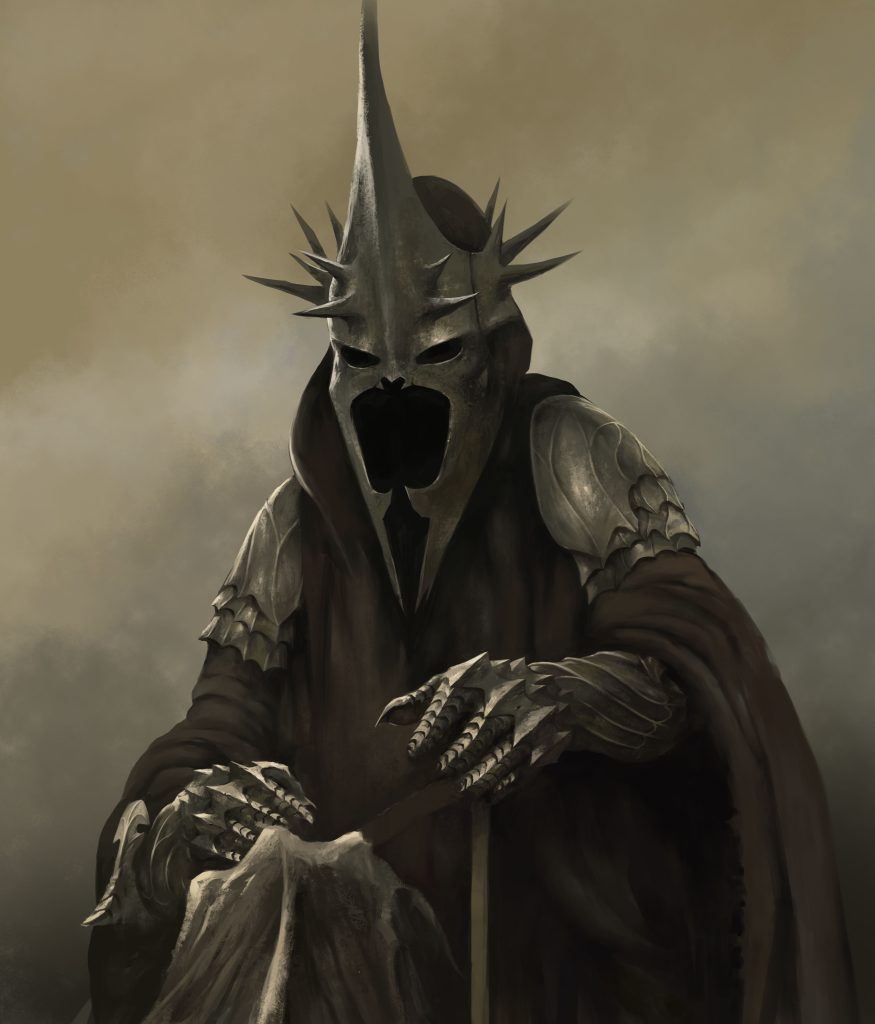
<p>The Witch-king of Angmar, also known as the Lord of the Nazgûl, was the leader of the Nazgûl (Ringwraiths) and <a class="glossaryLink" aria-describedby="tt" data-cmtooltip="<div class=glossaryItemTitle>Sauron</div><div class=glossaryItemBody><div class="tko-encyclopedia-entry"><strong>Sauron is the principal adversary of the Free Peoples in the Second and Third Ages. Originally a Maia, he serves Morgoth before pursuing his own project of domination, most decisively through the making of the One Ring.</strong><br/>From Morgoth&#x27;s servant to the Lord of the RingsIn the First Age, Sauron is a servant of Morgoth associated with sorcery, deception and the stronghold of Tol-in-Gaurhoth. His encounter with Beren, Finrod, Lúthien and Huan places him within the earlier mythology, long before the hobbits' journey.<br/>During the Second Age he presents himself to the Elven-smiths as a benefactor and shares knowledge used in the forging of Rings of Power. The One Ring is his attempt to place the bearers of the others under his control. The conflict that follows devastates Eregion and eventually draws the Númenóreans into a wider struggle. In Númenor, Sauron uses the king's fear of death and desire for supremacy to help bring about the Downfall.<br/>Defeat, recovery and the limits of the EyeThe Last Alliance overthrows his bodily power, but the Ring survives. In the Third Age, Sauron's return is concealed for a time behind the identity of the Necromancer at Dol Guldur before he openly rules from Mordor. <strong>The quest depends on a blind spot in his judgement:</strong> he expects opponents to use the Ring, making its voluntary destruction difficult for him to imagine.<br/>The Eye is a powerful image of scrutiny and menace; it should not be treated as proof that Tolkien's Sauron is literally nothing but a floating eyeball. The book also preserves evidence of bodily form, including Gollum's recollection of a missing finger. His final ruin follows the destruction of the power invested in the Ring, leaving him unable to rebuild his former dominion.<br/>Primary references<em>The Silmarillion</em>, "Of <em>Beren and Lúthien</em>”, "Akallabêth” and "Of the Rings of Power and the Third Age”; <em>The Lord of the Rings</em>, Book II, "The Council of Elrond”; Book V, "The Black Gate Opens”; Book VI, "Mount Doom”.<br/>Related encyclopedia entriesMelkor<br/>The One Ring<br/>Celebrimbor<br/>Barad-dûr<br/><br/></div>" href="https://tolkienology.net/glossary/sauron/" data-gt-translate-attributes='[{"attribute":"data-cmtooltip", "format":"html"}]' tabindex="0" role="link">Sauron</a>’s second-in-command during the Second and Third Ages of Middle-earth. As the Nazgûl hovered on his great beast over the dying Théoden, the King’s niece Éowyn and the hobbit Meriadoc Brandybuck stood in his way. Éowyn: Be gone, foul dwimmerlaik, lord of carrion! Leave the dead […]</p>
FREE REFERENCE ENTRYUpdated 13 February 2023Attribution: Tolkienology
Contents of this entry
The Witch-king of Angmar, also known as the Lord of the Nazgûl, was the leader of the Nazgûl (Ringwraiths) and Sauron’s second-in-command during the Second and Third Ages of Middle-earth.
As the Nazgûl hovered on his great beast over the dying Théoden, the King’s niece Éowyn and the hobbit Meriadoc Brandybuck stood in his way.
Éowyn: Be gone, foul dwimmerlaik, lord of carrion! Leave the dead in peace!
Nazgûl: Come not between the Nazgûl and his prey! Or he will not slay thee in thy turn. He will bear thee away to the houses of lamentation, beyond all darkness, where thy flesh shall be devoured, and thy shriveled mind be left naked to the Lidless Eye.
Éowyn: Do what you will, but I will hinder it, if I may.
Nazgûl: Hinder me? Thou fool. No living man may hinder me!
Éowyn: But no living man am I! You look upon a woman. Éowyn I am, Eomund's daughter. You stand between me and my lord and kin. Be gone, if you be not deathless! For living or dark undead, I will smite you, if you touch him.