Contents of this entry
The singer within the northern defenceLament after the fulfilment of a claimPrimary referencesRelated encyclopedia entries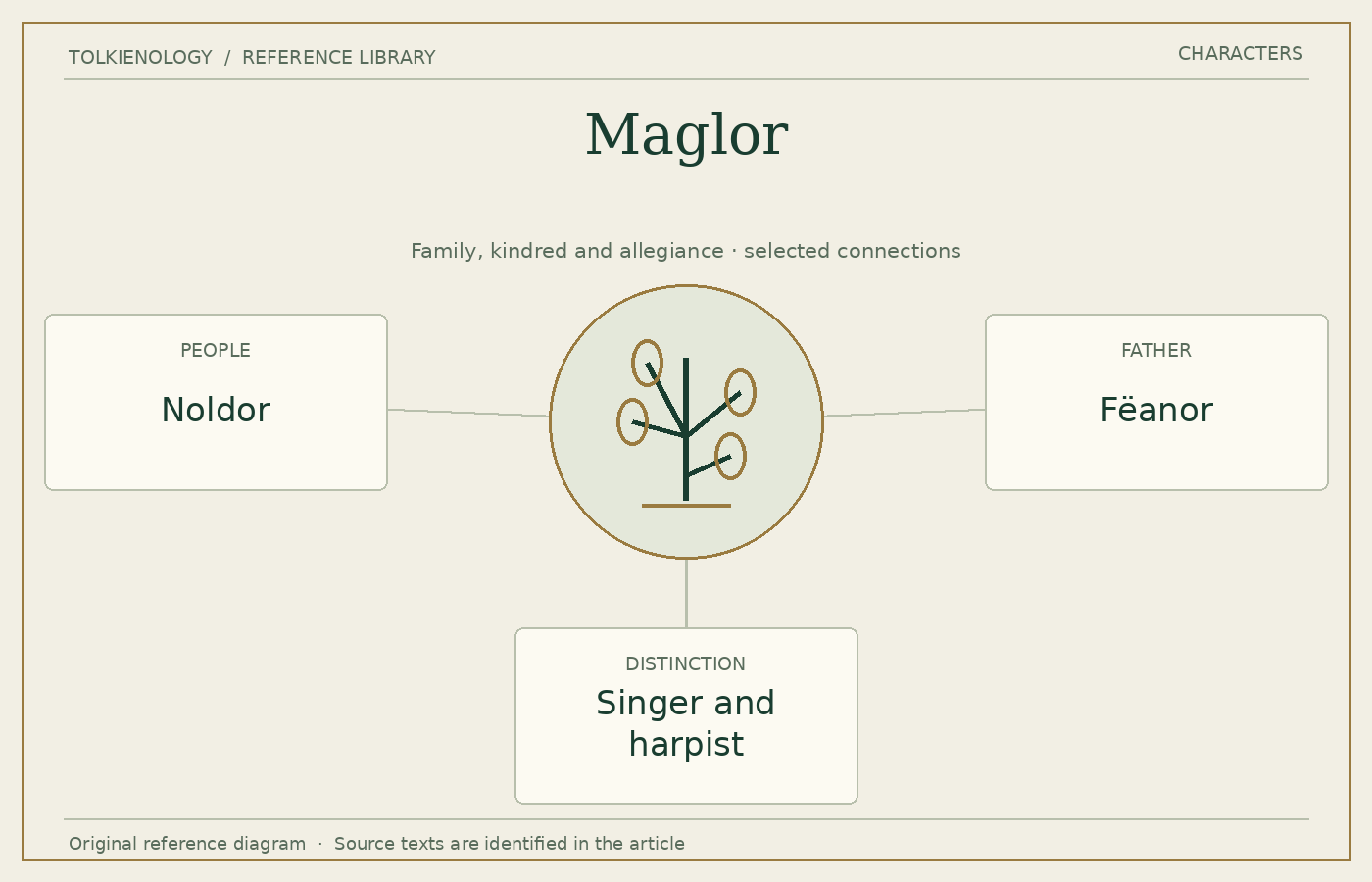
The singer within the northern defence
Maglor holds an exposed eastern region commonly called Maglor’s Gap. His position belongs to the long defensive arrangement around the lands facing Angband. The later ruin of that arrangement shows that the sons of Fëanor are military defenders as well as participants in the conflicts among the Elves themselves.
The distinction does not excuse the Kinslayings. At the Havens of Sirion, Maglor belongs to the attacking company, but afterwards he cares for Elrond and Elros. The published narrative allows affection to grow in circumstances made possible by violence. A responsible summary preserves both parts rather than letting the fostering erase the attack.
Lament after the fulfilment of a claim
After the War of Wrath, Maglor argues against continuing the demand by force, but he and Maedhros nevertheless take the remaining Silmarils. The jewel burns him as it does his brother. He casts it into the Sea and is left wandering the shores, singing in grief.
The end is not a detailed report of every subsequent age of his life. Statements that place him at later battles or supply a final death need a specific textual basis; modern fan traditions are not continuations written by Tolkien.
His association with song gives the history a form of remembrance within itself. The singer does not stand outside the events as an innocent chronicler. His lament is shaped by participation and guilt, making artistic power no automatic escape from responsibility for what has happened.
Primary references
The Silmarillion, “Of the Return of the Noldor”, “Of the Ruin of Beleriand and the Fall of Fingolfin” and “Of the Voyage of Eärendil and the War of Wrath”.