Contents of this entry
A royal daughter who sees the dangerThe secret way and the survival of a peoplePrimary referencesRelated encyclopedia entries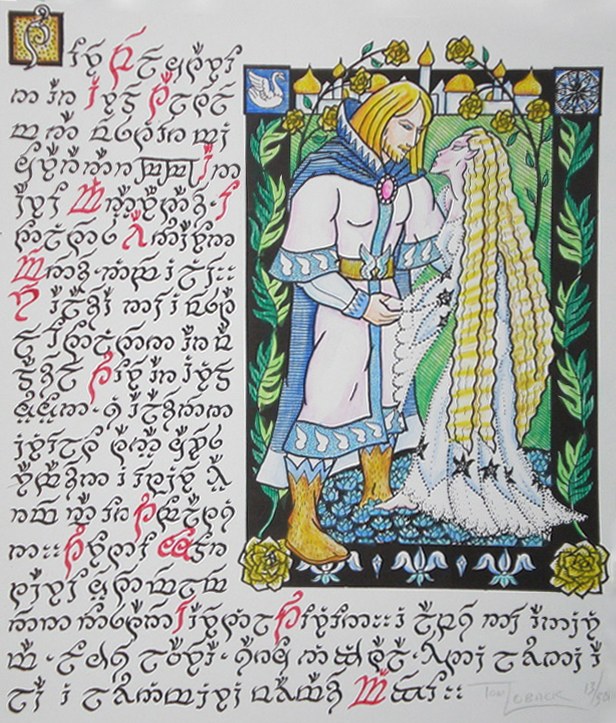
A royal daughter who sees the danger
Idril belongs to the exiled house of Fingolfin and survives the difficult passage from Aman into Middle-earth. In Gondolin she recognises dangers that the city’s apparent safety encourages others to ignore. Her marriage to Tuor gives the hidden realm a new connection with the mortal peoples beyond its boundaries.
Maeglin’s desire for Idril becomes part of the hostility surrounding Tuor and their child. The relationship must not be presented as a mutual romance interrupted by a rival: her refusal is clear, and later attempts to claim power over her form part of the betrayal’s violence.
The secret way and the survival of a people
The escape route Idril has prepared is an act of political as well as familial judgement. She does not simply wait for a warning to become a catastrophe. When the city is attacked, the route allows survivors to leave under conditions in which defending the walls can no longer secure their future.
Eärendil’s survival eventually makes possible a different appeal for help beyond the wars of Beleriand. That future gives retrospective significance to Idril’s preparations without reducing them to a device for preserving a single destined hero: a community also escapes through her refusal to equate the city’s permanence with its people’s only possible life.
Later traditions of her voyage west with Tuor belong to an exceptional family history. As with the accounts of Tuor’s fate, careful reference writing should preserve the distinction between what the narrative directly follows and what it reports as a tradition. The different Gondolin texts also vary substantially in detail and scale.
Primary references
The Silmarillion, “Of Maeglin” and “Of Tuor and the Fall of Gondolin”; Unfinished Tales, “Of Tuor and his Coming to Gondolin”; The Fall of Gondolin, edited by Christopher Tolkien.