Contents of this entry
History and contextLiterary context and distinctionsPrimary referencesRelated encyclopedia entriesExplore furtherHistory and context
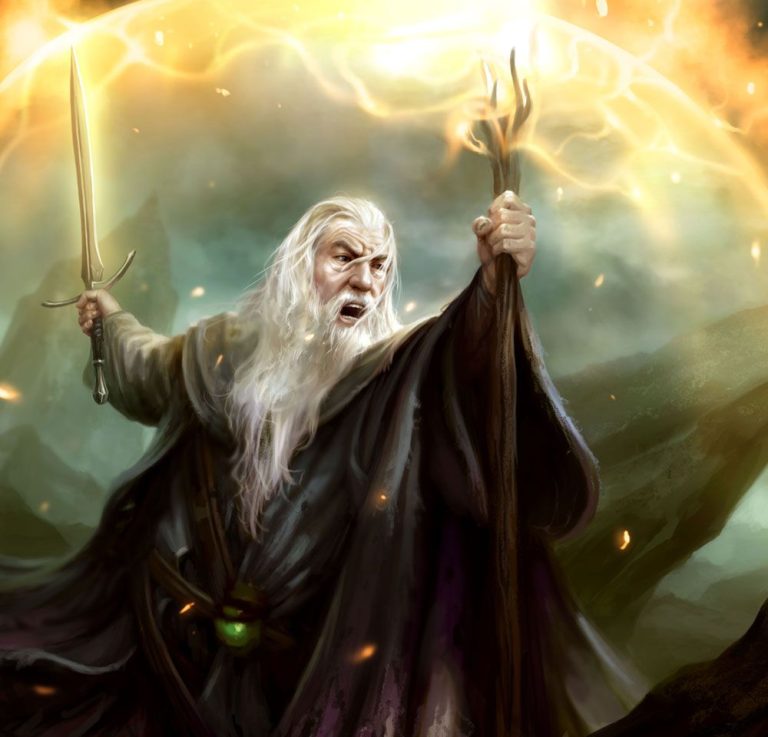
The Valaquenta names several Maiar and describes their associations with particular Valar. They are not a single nation with a common political allegiance. Sauron becomes Morgoth’s servant, while other Maiar resist him. The Istari belong to this order, but their mission involves entering Middle-earth in specially limited embodied forms. Gandalf’s nature as Olórin therefore does not mean that his actions during the War of the Ring can be understood as an unrestricted display of spiritual power. Melian’s presence in Beleriand and her union with Thingol offer another very different participation of a Maia in the history of embodied peoples.
Literary context and distinctions
“Maia” is singular and “Maiar” plural. The term does not mean an ordinary human wizard, and it should not be used as a convenient label for every mysterious being whose origin remains unexplained. Tom Bombadil’s uncertain identity is a prominent case where a classification requires evidence that the narrative does not supply. The Balrogs’ nature also belongs to the development of Tolkien’s mythology; later accounts place them among corrupted spirits, while earlier conceptions should not be silently combined with the mature account. Distinguishing the ontology of the legendarium from a film’s visual presentation helps avoid misleading hierarchies of supernatural power.
Primary references
- The Silmarillion, “Valaquenta”.
- Unfinished Tales, Part Four, “The Istari”.
- The Silmarillion, “Of Thingol and Melian”.