Contents of this entry
Names, nature and missionFrom Bilbo’s journey to the War of the RingNarya and the ending of his taskLiterary contextPrimary referencesRelated entries and essays
Names, nature and mission
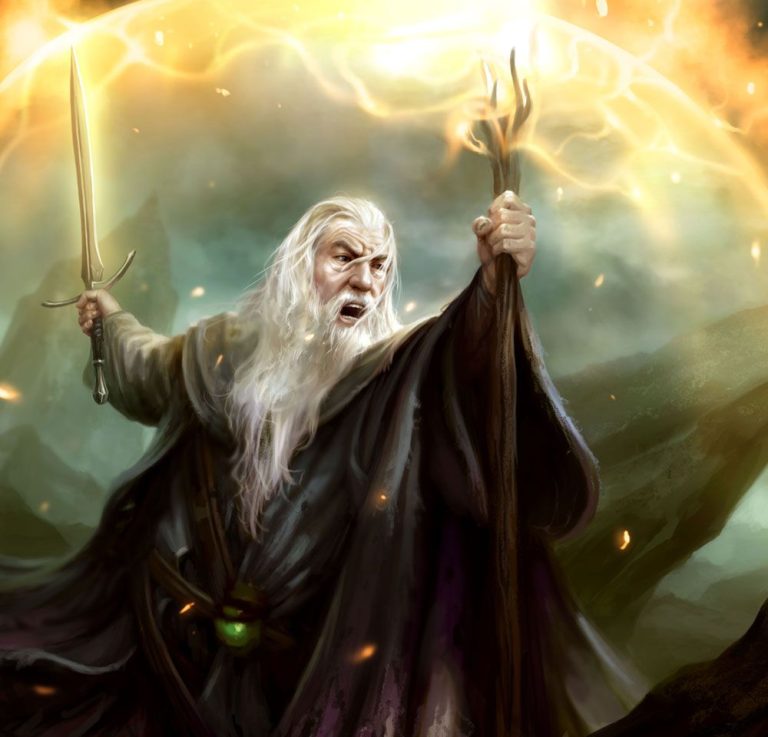
Gandalf is called Mithrandir by the Elves and in Gondor. His mission is principally to encourage resistance, awaken courage and bring allies into cooperation, rather than to establish himself as a ruler. Tolkien’s account of the Istari distinguishes their genuine embodiment from a merely theatrical disguise: they can experience weariness, pain and death. Their knowledge and power are exercised under the limits of their commission.
Olórin is associated in the Valaquenta with the people of Lórien and with learning pity and patience from Nienna. These associations illuminate Gandalf’s later attention to the vulnerable, but do not turn every episode of his journey into a direct intervention by a named Vala.
From Bilbo’s journey to the War of the Ring
Gandalf helps organise the expedition to Erebor in The Hobbit and recommends Bilbo as the company’s burglar. His later investigation of Bilbo’s ring becomes essential to identifying it as the One Ring. He refuses Frodo’s offer to surrender it to him because his own desire to help could become an avenue to domination. His refusal is a judgement about the Ring’s nature as well as his own possible temptation.
In Moria he confronts the Balrog later called Durin’s Bane. The struggle continues beyond the fall from the bridge and ends on the peak of Celebdil, where both combatants die. Gandalf returns as the White and resumes his task. Describing his death simply as occurring in the mines obscures the sequence narrated in The Two Towers.
Narya and the ending of his task
Círdan entrusts Gandalf with Narya, one of the Three Rings. Its association with strengthening courage suits his mission, but Narya must not be confused with the Flame Imperishable or treated as proof that he can use the One Ring safely. After Sauron’s defeat, Gandalf sails from the Grey Havens with the other principal Ring-bearers.
Literary context
Comparisons with the wandering Odin can illuminate Gandalf’s appearance and literary ancestry. They are comparisons, not an identification of Gandalf with a Norse deity inside Tolkien’s fictional world. Film adaptations also redistribute actions and dialogue, so the books remain the reference point for this entry.
Primary references
- The Silmarillion, “Valaquenta”.
- Unfinished Tales, Part Four, “The Istari” and “The Quest of Erebor”.
- The Fellowship of the Ring, “The Shadow of the Past” and “The Bridge of Khazad-dûm”.
- The Two Towers, “The White Rider”.
- The Return of the King, “The Grey Havens”.